
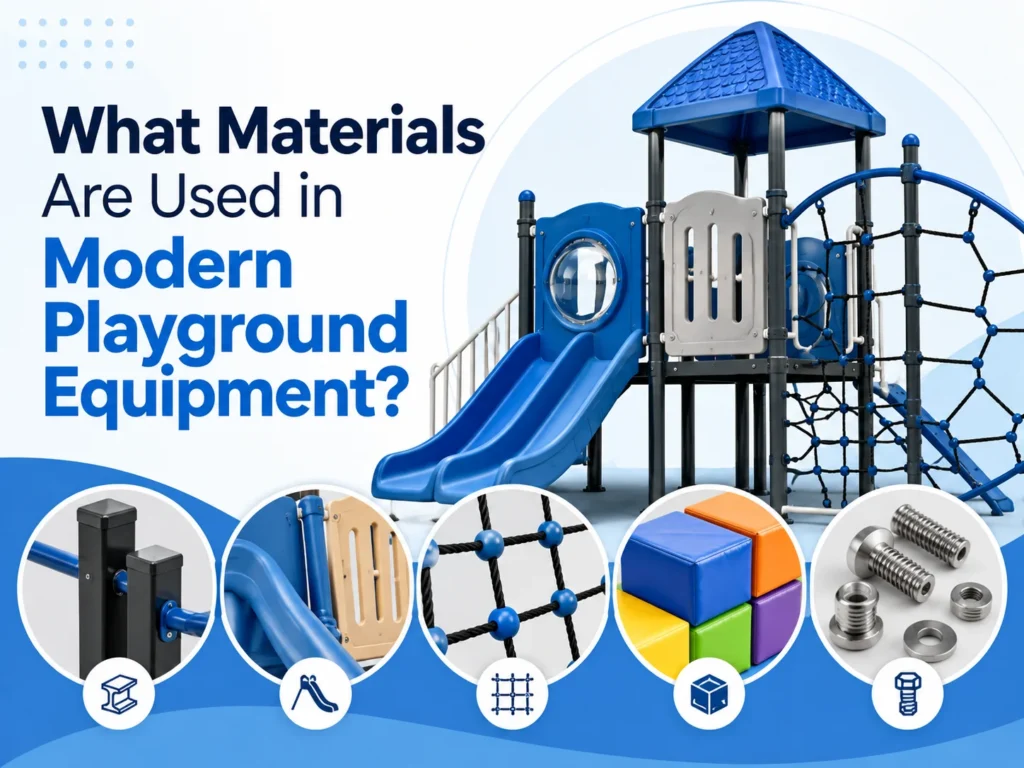


When I open a playground material file, I check the parts one by one. The frame, slide, panel, rope section, cap, anchor, coating area and soft play cover may all need separate notes in the same order.
The buyer should read each material beside the part where it is used. A support post, slide panel, rope bridge, swing hanger, PVC cover and anchor point do not carry the same job. If they are all written under one broad material line, the order becomes harder to check later.
This overview explains the main material groups used in modern playground equipment and how buyers can keep those notes clear before quotation, production, packing and maintenance.
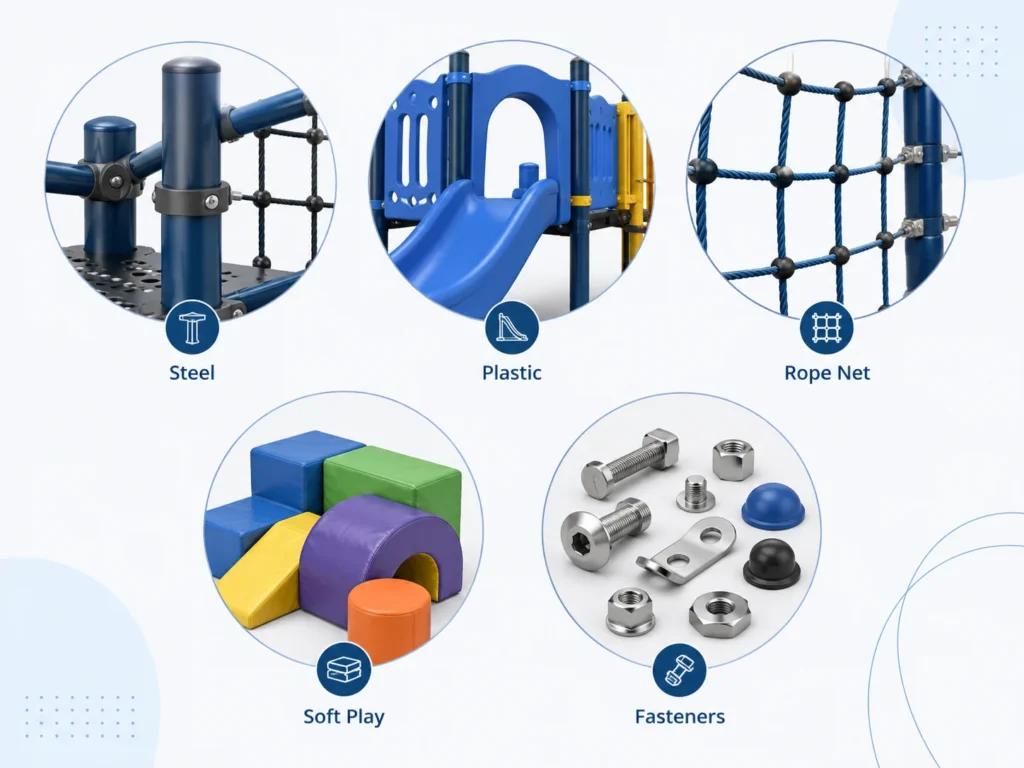
A playground material file should name the actual part: frame, slide, panel, rope, cover, fastener, cap or coating.
1. Steel frames and support structures
Steel is often used for main playground posts, platform supports, swing frames, climbing structures, guardrails and other load-carrying sections. In a material file, the buyer should not accept only the word “steel” without knowing where it appears.
Frame material should be checked together with the site. Outdoor equipment may face rain, sun, dust, coastal air and public use. Indoor structures may need a different discussion around room size, padding, floor fixing and cleaning.
The coating or surface treatment should also be named. If the project needs galvanizing, powder coating or another treatment direction, that note should sit beside the drawing and product list.
A useful steel note says which part uses steel, how it is treated, where it is installed and how the part will be packed or marked.
2. Plastic slides, panels and molded parts
Plastic parts are common in slides, roofs, panels, tunnels, decorative faces and molded play elements. The buyer should check which parts receive heavy child contact and which parts are mainly decorative.
For slides, the material note should sit beside slide height, exit direction, route shape and site condition. A small toddler slide, spiral slide, tube slide and larger outdoor slide may not need the same discussion.
For outdoor use, the buyer should ask how the plastic parts will face sunlight, rain and public traffic. For indoor use, cleaning method, surface touch and replacement records may matter more.
3. Rope nets and climbing materials
Rope nets are used in climbing routes, bridges, tunnels, adventure structures and some indoor play routes. A rope note should show the route, fixing points, connector style and the user age group.
The rope part should not be checked away from the drawing. A rope bridge, climbing net, vertical net, balance route and indoor rope corner receive different movement and wear.
The buyer should also keep photos of rope sections and connectors. Those records are useful when maintenance staff need to inspect a worn area or ask for a replacement section later.
For rope and climbing reading, review playground rope net material guide and playground climbing equipment guide.
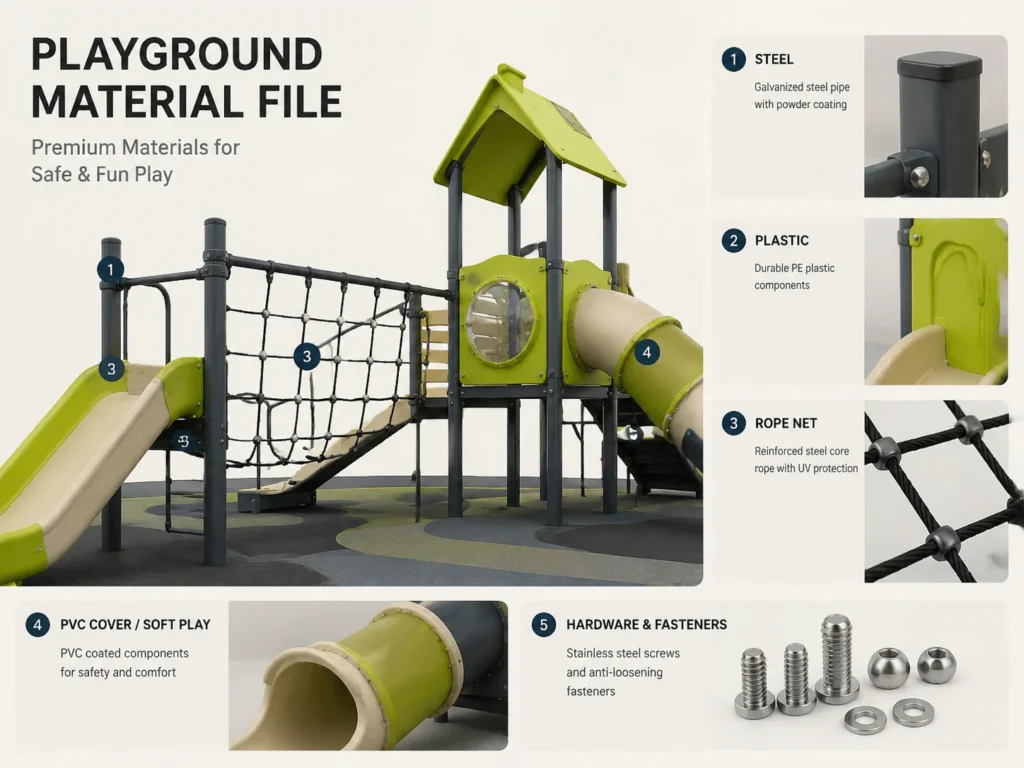
Part names and material notes help production, inspection, installation and spare part support after shipment.
4. Stainless steel for special slide sections
Stainless steel may appear in custom slides, hillside slide routes, park landmark features and other special slide sections. It should be discussed with the support frame, route, surface, edge treatment and installation access.
The buyer should not choose stainless steel only because it sounds strong. A long slide route may change packing volume, support requirements and installation steps. The site may also need to consider sunlight, slope, landing space and maintenance access.
If the slide is curved, long or built into a hillside, the drawing should show section names and packing groups clearly. That helps the installer understand what each part is after the cartons arrive.
5. Wood-look and theme materials
Many parks, resorts and nature-themed playgrounds use wood-look finishes. The buyer should ask what the part is actually made from. It may be real wood, plastic wood, coated steel with wood-style finish or another material direction.
This matters because appearance and maintenance are not the same thing. A natural-looking part still needs clear notes for weather, surface finish, fixing method, cleaning and replacement.
The material file should name the real part, not only the theme style. If the project is near sand, water, trees or strong public traffic, those site details should be written into the material discussion.
For project planning, review custom playground equipment.
6. Soft play foam, PVC covers and indoor parts
Indoor soft play equipment normally uses foam, PVC covers, padded posts, soft shapes, mats, netting, seams, zippers and ball pit parts. These materials should be checked as a room system, not only as separate products.
The file should show room height, cleaning method, traffic level, toddler area, role play corner, slide exit and parent view. Those points affect how the material will be used every day.
For maintenance, record cover part names, seam positions, zipper access and net fixing points. When a cover needs replacement later, the buyer and factory can identify the correct part faster.
For indoor material review, read soft play equipment and indoor playground equipment.
7. Fasteners, caps, anchors and hardware bags
Small hardware is easy to ignore during quotation, but it affects installation and maintenance. Bolts, washers, caps, anchors, hangers, connectors and other small parts should be photographed and named before shipment.
A hardware bag should match the product list and drawing. If the installer cannot identify a small part, installation may slow down even when the main frame is correct.
For buyers who place repeat orders, hardware records also help compare shipments. If one batch uses a different cap, fastener or connector, the record makes the change easier to find.
8. Material selection should follow project type
A school playground, kindergarten area, public park, resort play corner, community playground and indoor commercial room may use different material priorities.
A school may need strong daily-use records and easy inspection. A park may need outdoor material discussion and maintenance access. A resort may care about visual fit and guest route. An indoor room may focus on foam, PVC cover, cleaning and parent flow.
The supplier should not recommend materials from a catalog photo alone. The project type, site condition, user age and maintenance plan should come first.
Material file checklist for buyers
Before approving a playground material file, check these points:
- Project type, destination country and site condition
- Outdoor or indoor use notes
- Steel frame position and surface treatment
- Plastic slide, panel and roof material notes
- Rope net route, connectors and fixing points
- Stainless slide section, support and packing notes
- Soft play foam, PVC cover, seams and netting details
- Fasteners, caps, anchors and hardware bag records
- Certificate or document discussion by product scope
- Maintenance and spare part records after installation
Conclusion: material names should stay connected with real parts
Modern playground equipment uses several material groups in one project. The buyer should check each material beside the actual part, the site condition, the drawing, the production record and the maintenance plan.
A clear material file helps the factory produce the order, helps the buyer inspect the goods, helps the installer identify parts and helps the owner ask for replacement support after the playground opens.
If you are preparing a playground material file, send us the project type, site photos, drawing, destination country, material concerns, product list and maintenance needs. We can review the material direction before quotation.
FAQ
Which parts should be named in a playground material file?
The file should name the frame posts, platforms, slides, panels, rope sections, stainless areas, foam parts, PVC covers, netting, caps, anchors, fasteners and coating areas by their position in the order.
Why should material notes be written by part?
Part-level material notes help the buyer check production, inspection, packing and later maintenance. A frame post, slide panel, rope section, swing hanger or PVC cover should not be hidden under one broad material name.
What outdoor site details should be checked before material approval?
Before approving outdoor materials, place the weather, sun direction, rain exposure, dust level, coastal air, public traffic, drainage and maintenance access beside the drawing and product list.
What materials are common for indoor soft play equipment?
Indoor soft play equipment commonly uses foam, PVC covers, padded posts, netting, zippers, seams, floor mats, ball pit parts and soft play shapes. Cleaning method and room traffic should be checked before approval.
When should buyers confirm playground material details?
Material details should be confirmed before final quotation and production, while the drawing, product list, site condition, destination market and maintenance needs can still be checked together.