
Community Park Playgrounds
Community parks are used again and again by nearby families. The layout should be easy to enter, easy to watch and not too crowded for daily use.
Outdoor and indoor play projects made in China.
Photos, rough sizes, or drawings are all usable for a first reply.

A park playground sits inside a larger public space. Children play, parents wait, walkers pass by, maintenance staff enter, and new visitors need to understand the area quickly.
Send the site size, entrance direction, nearby paths and a few wide photos. We will check where children enter, where parents stand, where slide exits point, and how the playground fits the rest of the park.
For public projects, mark trees, benches, walkways, fences, lighting, drainage and any area that cannot be used. These small details often decide the final layout.

Park playgrounds need easy access, clear paths, age zones, shade planning and space for waiting adults.
Before we place the equipment, we need to see what sits around the ground. A bench on one side, a tree in the corner, or a path behind the site can change the entrance direction.
Mark where most families arrive from. The entrance should be easy to find without sending children across a slide exit or swing path.
Benches, shade, open view and stroller space matter in parks. Adults need a place to stay without blocking the play route.
A public park may have toddlers, older children and families using the same space. The layout should help each group find its own level.
Keep a service side open. The park team may need to clean the floor, check bolts, or carry in tools after the playground is in use.
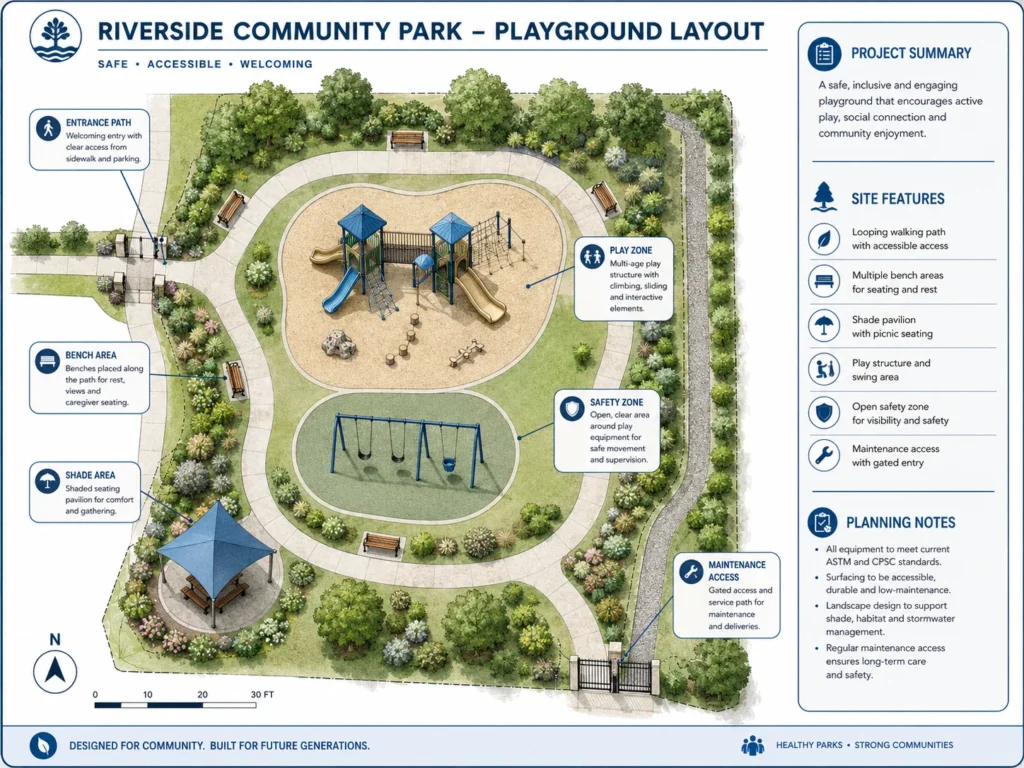
Park projects can look very different depending on who uses the space and what the area already has around it.
Community parks are used again and again by nearby families. The layout should be easy to enter, easy to watch and not too crowded for daily use.

Public parks need clear walking routes and simple wayfinding. Visitors may not know the site, so the first view should make the play area easy to read.

Scenic parks may care more about theme, photo value and landscape fit. The structure should still leave clean paths for people who only pass through.

Forest, animal, mountain and river themes can work well in parks. The theme should support the route, not hide entrances or create blind corners.

Rope nets, bridges and balance paths give older children more active play. These areas need enough space around them and clear separation from toddler play.

Younger children need lower slides, short steps and parent view nearby. A toddler corner should not sit at the busiest crossing point of the park.
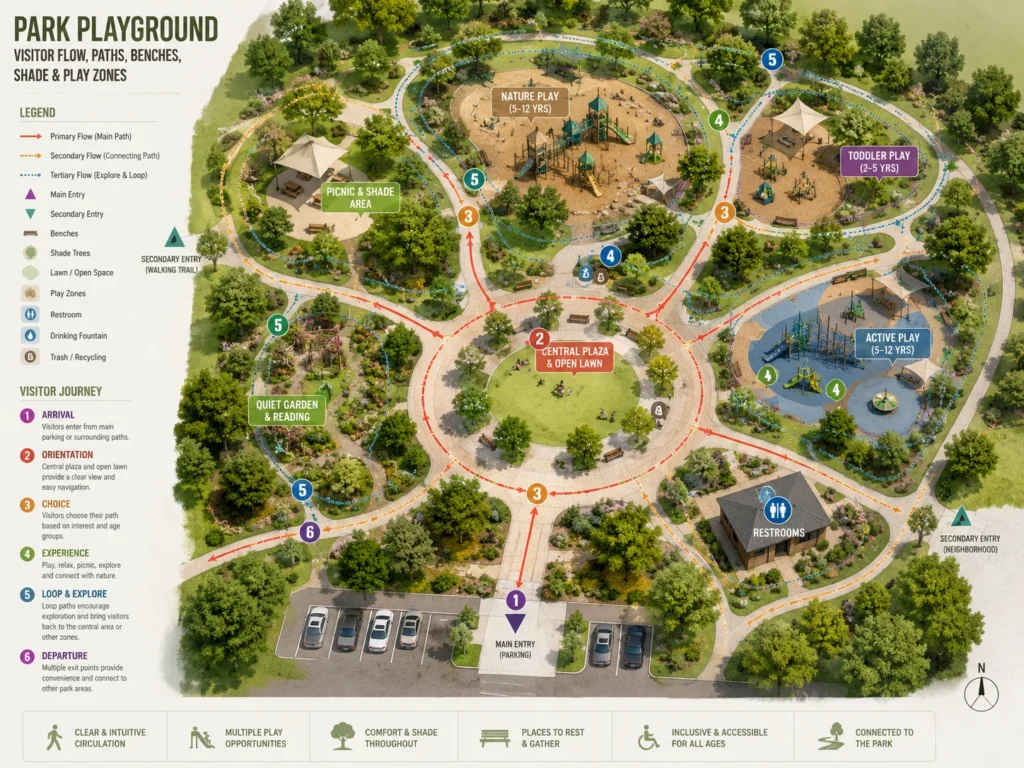
A good park layout does not force every visitor through the same narrow point. Parents with strollers, children running, older people walking and maintenance staff should all have a clear way around the playground.
Entrance direction, walking paths, slide exits, climbing access, toddler area, older-child area, benches and shaded points are marked early. This keeps the playground from fighting with the park route.
If the site is close to water, road, parking area or steep ground, send that photo first. We can avoid placing main exits or waiting areas on the wrong side.
Mixed-age sites work better when the zones are clear. A fence is not always needed. Distance, direction, color and height difference can also separate use areas.
A park quote is more accurate when the site photo shows what sits around the play area, not only the empty ground.
| Park Detail | Why It Matters | What to Send |
|---|---|---|
| Main Path | Visitors enter from the path, so the playground should not block normal park movement. | Wide photo showing paths, gates and the expected entrance side. |
| Parent Area | Adults wait, sit, watch and move with strollers around the playground. | Mark benches, shade, seating plans or space for future seating. |
| Mixed Ages | Toddler play and older-child climbing should not fight for the same narrow space. | Tell the age groups and whether separate zones are needed. |
| Landscape Edge | Water, roads, slopes, walls and planting areas can change equipment position. | Send photos from all sides and mark blocked or sensitive edges. |
| Maintenance Route | Public sites need space for checking, cleaning and part replacement later. | Tell where staff or vehicles can enter the site if needed. |
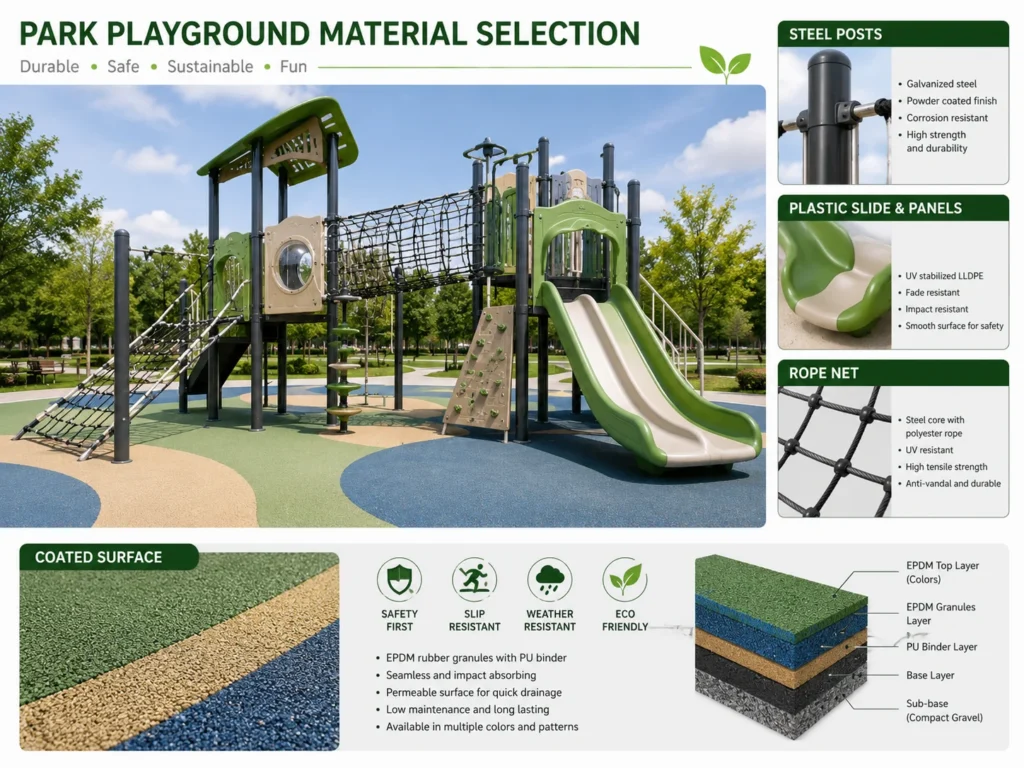
Park equipment stays in public view. Visitors touch the parts all day, weather works on the surface, and the maintenance team needs parts that can be checked later.
Steel posts, coated surfaces, plastic slides, rope nets, fasteners and caps should be selected with the site in mind. A shaded community park and a sunny coastal park do not need the same discussion.
If the site has strong sun, salt air, heavy rain, dust or public daily traffic, say it before the product list is fixed. We can add the note to the order file and check the material direction.
For themed parks, appearance is important, but maintenance still matters. Large decorative panels, special colors or custom shapes should not make later checking difficult.
We start with the public space, then choose the equipment.
Wide photos, site size, country and park type open the project file.
Paths, trees, benches, slopes, gates, roads and blocked areas are noted.
Toddler, family, climbing, adventure or mixed-age areas are discussed.
The layout keeps visitor flow, parent waiting and maintenance access in mind.
The quote follows the confirmed site, equipment direction and material notes.
FAQ for public parks, community play areas and outdoor visitor spaces.
Send the site size, park type, user age range, ground condition, visitor flow, entrance direction, nearby paths, photos and any document or approval request from the project side.
Yes. Public park projects can use separate zones or a mixed layout with lower play for younger children and more active equipment for older children.
Main points include clear entrance, open walking routes, slide exits, parent waiting space, shade, maintenance access, age zones and enough space around moving or active equipment.
Yes. Park playgrounds can use nature, animal, forest, city, ocean, adventure or local culture themes. The theme should still keep the route easy to read for visitors.
We can prepare product lists, layout notes, selected photos, packing records or document references according to the order stage. Send the review requirement before quotation is finalized.
Send wide photos of the park area, site size, entrance side, age range and any nearby paths, trees, benches or blocked edges. We will check the layout direction before quoting.