
Small Slide Playsets
Small slide sets work well for younger children when the platform is low and the exit area is open. The route should be easy to understand from the first step.
Outdoor and indoor play projects made in China.
Photos, rough sizes, or drawings are all usable for a first reply.

For kindergarten projects, we do not take a park playground and make it smaller. Young children stop suddenly, turn back on steps, wait together, and look for the teacher more than they look for signs.
For this kind of project, we look at platform height, teacher view, slide exit, entry steps, color, soft landing space and how children will move during daily class time. A simple layout often works better than a crowded one.
Send the site size, age range and a photo from the teacher’s side of the yard or room. That view is often more useful than a front-only product photo.

Kindergarten play equipment should fit young children and the adults who supervise them every day.
Kindergarten equipment is chosen around children who are still learning body control. The design should not depend on them reading rules or judging distance well.
Write the age group clearly: toddler class, preschool class, older kindergarten class, or mixed use. With young children, even a small age gap can change the way they use steps, bridges, and slides.
Mark where teachers usually stand. The layout should not hide the slide exit, climbing part, or quiet corner behind a high panel.
Kindergarten children often move in a group. Entry points, small stairs and slide queues need enough room so one child does not block the whole route.
Some schools use the play area between classes. Some use it for longer outdoor time. The plan should match how often the equipment will be used.
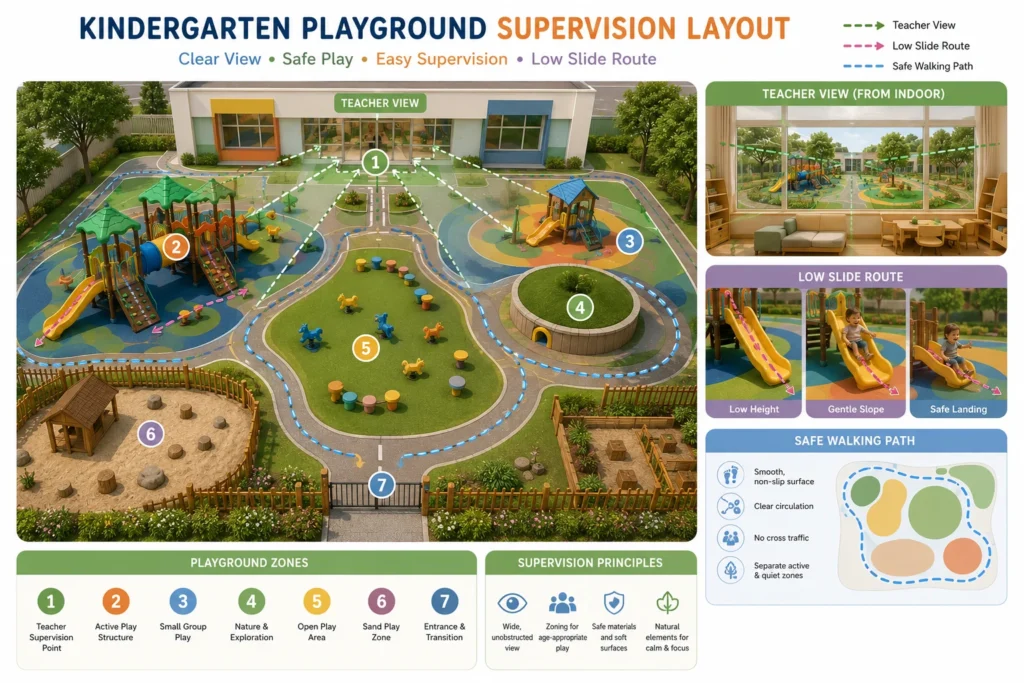
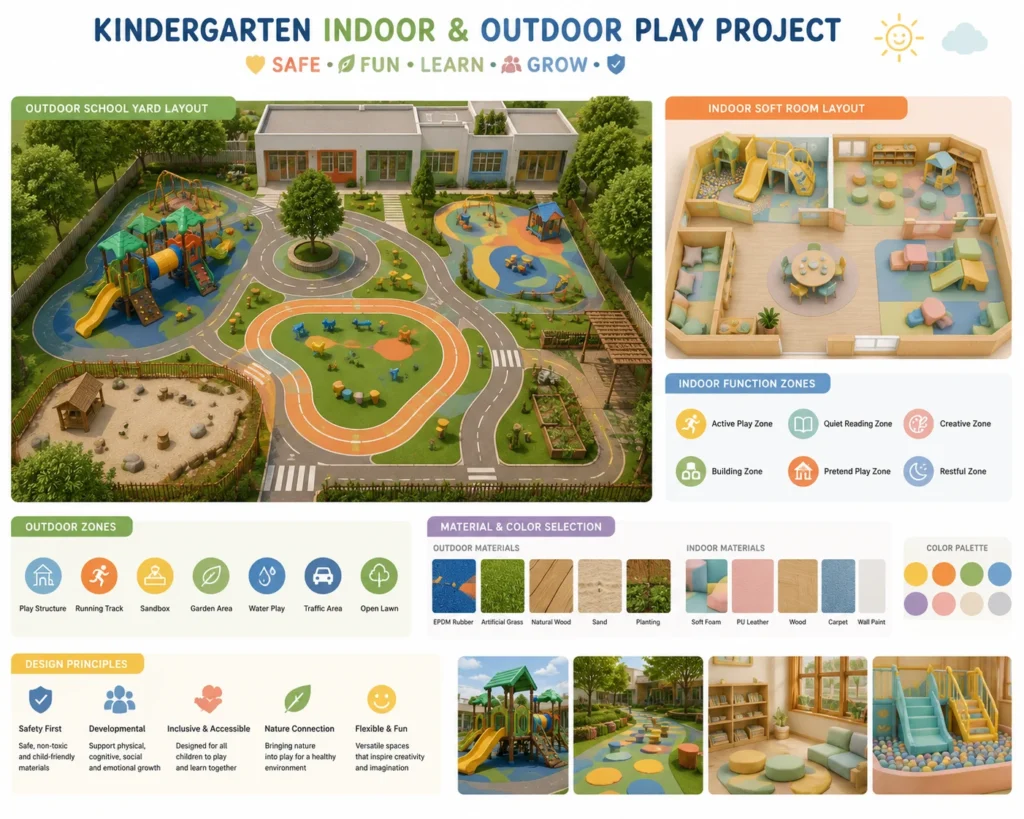
A kindergarten may use an outdoor yard, an indoor room, or a mixed play corner. The equipment should be chosen by the children’s age and the school’s daily routine.
Small slide sets work well for younger children when the platform is low and the exit area is open. The route should be easy to understand from the first step.

Short climbing walls, low nets and easy bridges can help children practice movement without turning the whole structure into a difficult obstacle course.

Indoor preschool rooms may use foam blocks, small slides, padded walls and soft shapes. The room should stay easy to clean and easy for teachers to watch.

Low stepping paths, wobble bridges and simple balance parts add activity without needing tall structures. They are useful when the yard is wide but not very large.

Animal, forest, house or traffic themes can make the space friendly. For kindergarten use, the theme should not block sight lines or make the route confusing.

Some kindergarten yards need open space for group games as much as fixed play equipment. The structure should leave room for teachers to organize children.
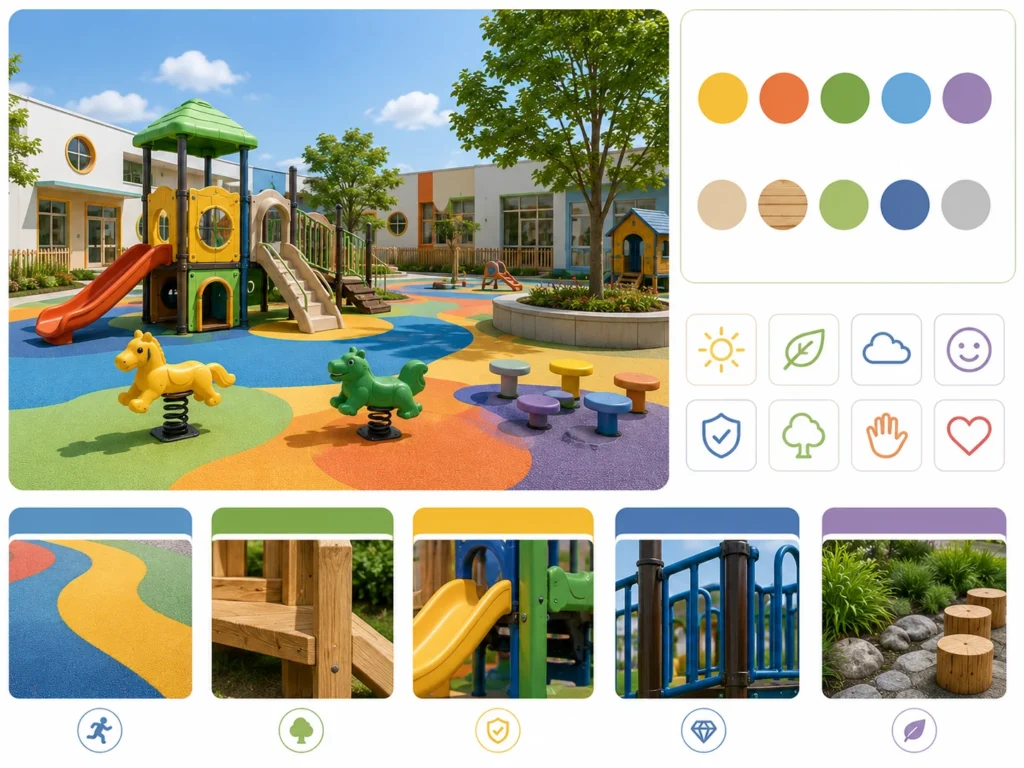
Kindergarten buyers often ask for bright colors. Bright can work, but young-child spaces also need calm areas, clear routes and parts that feel friendly when touched every day.
Handrails, caps, steps, slide edges, panel corners and small climbing parts receive more attention because younger children touch everything. A child may hold the same rail, sit on the same step and turn around in the same small place many times a day.
Color should help children read the space. Use stronger colors where they help children find the entrance, exit, or play zone. In a small room, too many bright colors can make the space feel busy.
If your school has a brand color, classroom theme or photo of existing buildings, send it early. We can keep the design closer to the school instead of choosing colors from a catalog alone.
A kindergarten site can be small, busy and supervised by a few teachers. The layout should support that daily reality.
| Site Detail | Why It Matters | What to Send |
|---|---|---|
| Age Range | Platform height, slide size and climbing difficulty change quickly with young children. | Age group, class level and whether different ages share the same area. |
| Teacher View | Teachers need to see slide exits, climbing points and quieter corners. | Photos from where teachers usually stand or sit. |
| Queue Space | Young children wait close together and can block the next child easily. | Expected group size and how many children use the area at one time. |
| Ground or Floor | Outdoor yards and indoor rooms need different landing and padding discussion. | Ground photo, floor type and any existing surface material. |
| School Routine | Short breaks and long play periods ask for different play flow. | Tell us whether the area is used daily, weekly or only at certain times. |
Some kindergartens have a yard. Some only have a room. Some need both. The play style may be similar, but the planning details are different.
Outdoor kindergarten yards can use small playsets, balance paths, low climbing and shaded rest areas. The surface, drainage and teacher view need early notes.
Indoor preschool rooms need softer materials, lower height and cleaning access. Columns, doors, window positions and classroom traffic can change the layout.
If your project has both spaces, send them as two areas. One product list for both may miss important details.
The order starts with children, teachers and the real site. Product names come after that.
Yard or room photos, size and age range help us open the file.
Show where teachers stand and where children enter the play area.
Small slides, low platforms, simple climbing and soft zones are selected.
The layout keeps exits, queues, supervision and open movement in mind.
The quote follows the confirmed size, play level, material notes and design.
FAQ for preschool and kindergarten playground orders.
Send the yard or room size, user age range, number of children, indoor or outdoor use, teacher supervision needs, preferred colors, site photos and any school approval requirement.
For younger children, we usually keep the platform lower, the steps easier, and the slide smaller. Teachers also need clear sight lines across the play area.
Yes. Colors, panels, themes, slide direction, play functions and layout can be discussed around the kindergarten site, age group and daily routine.
Mixed-age kindergarten sites can use separate zones, lower toddler elements and slightly more active parts for older preschool children. The age split should be clear before layout work starts.
Yes. Send the indoor room and outdoor yard as separate spaces. Each area needs its own size, photos, material notes and use routine.
Send the site size, age range, class size and photos from the teacher’s view. We will check the play level and layout direction before quoting.