
Commercial
For shared public use, we usually discuss public-use playground sets instead of light backyard products. Steel posts, platforms, molded panels, slides, climbing parts and fasteners should match community traffic.
Outdoor and indoor play projects made in China.
Photos, rough sizes, or drawings are all usable for a first reply.

A neighborhood play area is used in waves. Younger children may come in the morning. Older children may arrive after class. Parents may watch from a bench, a path, or the edge of the lawn.
Send the area size, photos, main age range and budget direction first. Then we can suggest a compact play set for a small residential green space, or a larger layout for a public recreation area.
Send the playground area size, photos of the space, age range, preferred equipment groups and any inclusive play or local approval requirement.

Children need room to move. Adults need clear sight lines. The maintenance team needs access to bolts, surfacing edges and worn parts later.
A community play environment is different from a private backyard. More children use the space, more adults watch from the side, and the equipment must handle daily public use.
Tell us who will use the area most often: toddlers, preschool children, older children, or mixed ages. This affects platform height, slide type, climbing challenge, swing seats and transfer points.
Send playground area size, nearby paths, benches, trees, fences, slopes, gates and service access. Movement flow matters when many children use the same play spaces.
Community projects may have city, HOA, school board or park and recreation review. Write down document needs, safety references, color rules, surfacing requests and opening schedule early.
A playground that looks strong in the first month still needs bolt access, cleanable corners, replaceable parts, readable labels and practical inspection routes years later.

One large structure can fill the drawing quickly, but it may not give the best play value. A better layout often mixes a main unit with swings, low panels, climbing parts, quieter corners and open space.
For shared public use, we usually discuss public-use playground sets instead of light backyard products. Steel posts, platforms, molded panels, slides, climbing parts and fasteners should match community traffic.

Accessible play may include ground-level play panels, wider approach routes, transfer platforms, sensory items, group play, resting points and layouts that help children with different abilities join the same play environment.

School age users usually need stronger movement: climbing routes, bridges, taller slides, balance events and social gathering decks. Equipment design should still leave clear sight lines for adult supervision.

Younger children need lower platforms, easier steps, short slides, rounded shapes, slow movement routes and clear adult access. A toddler area should not copy a school age playground system at a smaller size.

Rope nets, bridges, climbing panels and balance items add challenge and childhood development value. Spacing, grip size, route difficulty and fall height should match the age range using the area.

Slides and swings are familiar to every community, but they need correct exit zones, use zones, seat choices, frame direction and impact-attenuating surfacing discussions before layout confirmation.
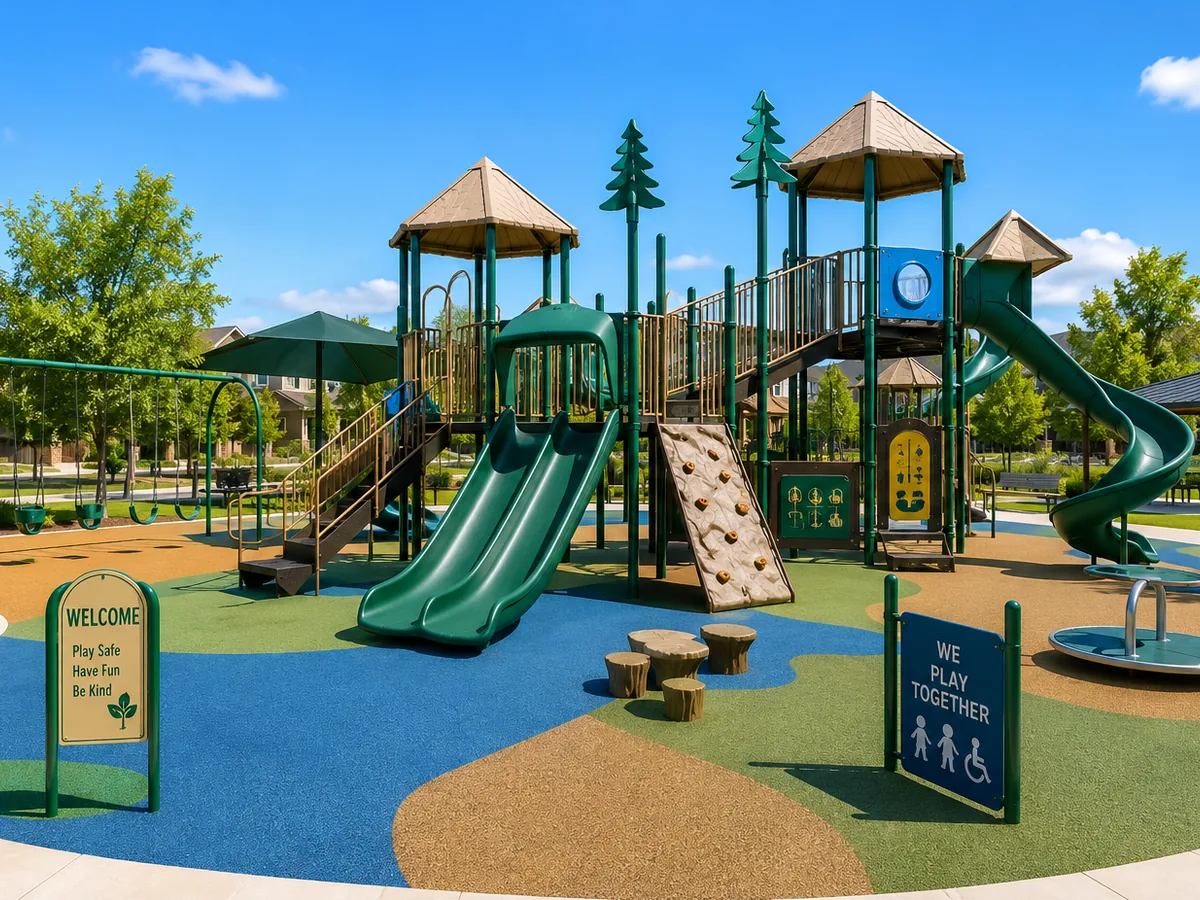
Community playground equipment sits outside, gets used by many families and stays visible to the whole neighborhood. Material choice must work beyond the opening ceremony.
For outdoor community areas, we look first at the steel frame, post finish, platform parts and fasteners. Coastal air, strong sun, heavy rain or high daily use can change the surface treatment discussion before production starts.
Plastic slides, roofs and activity panels often use LLDPE or HDPE-type molded parts depending on the product. We check color direction, UV-resistance discussion, wall thickness direction and assembly fit before production notes are finalized.
Rope nets, bridge parts, swing hangers, clamps, caps, bolts and deck panels should match the playground system, not just the picture in a catalog. If the community expects heavy traffic, tell us before the equipment design is fixed.
Good community playground designs do more than fill an empty lawn. They create a playground where children can practice movement, social play, imagination, confidence and problem solving.
| Development Goal | Useful Play Equipment | Design Note |
|---|---|---|
| Physical movement | Climbers, slides, balance beams, bridges and overhead events. | Match route difficulty to age range and fall height planning. |
| Social play | Group decks, talk tubes, role panels, wide platforms and shared activity points. | Leave space for children to gather without blocking every route. |
| Sensory play | Panels, textures, sound elements, ground-level activities and quiet corners. | Helpful for accessible play and for children who need slower interaction. |
| Confidence building | Graduated climbing routes, low-to-high steps, bridges and small challenge loops. | Children can try, step back and try again without leaving the play space. |
| Imagination | Theme panels, towers, playhouses, vehicles and color stories. | Theme should support the play environment without making maintenance harder. |
For U.S.-related projects, many buyers and park teams refer to the Consumer Product Safety Commission Public Playground Safety Handbook when reviewing public playground equipment.
For U.S.-related public play areas, many teams use CPSC guidance as a planning reference. The practical point is simple: younger children and older children should not be pushed into the same challenge level.
A safer playground solution connects equipment design, age separation, use zones, surfacing, visibility, maintenance and installation quality. The individual play structures matter, but the layout of the whole play area also matters.
If your buyer asks for ASTM, EN 1176, CPSC-related notes, third-party testing, material files or certificate documents, send that request before the quotation is confirmed. Scope, model, material, test date and destination market should be checked carefully.
Reference: Consumer Product Safety Commission Public Playground Safety Handbook.
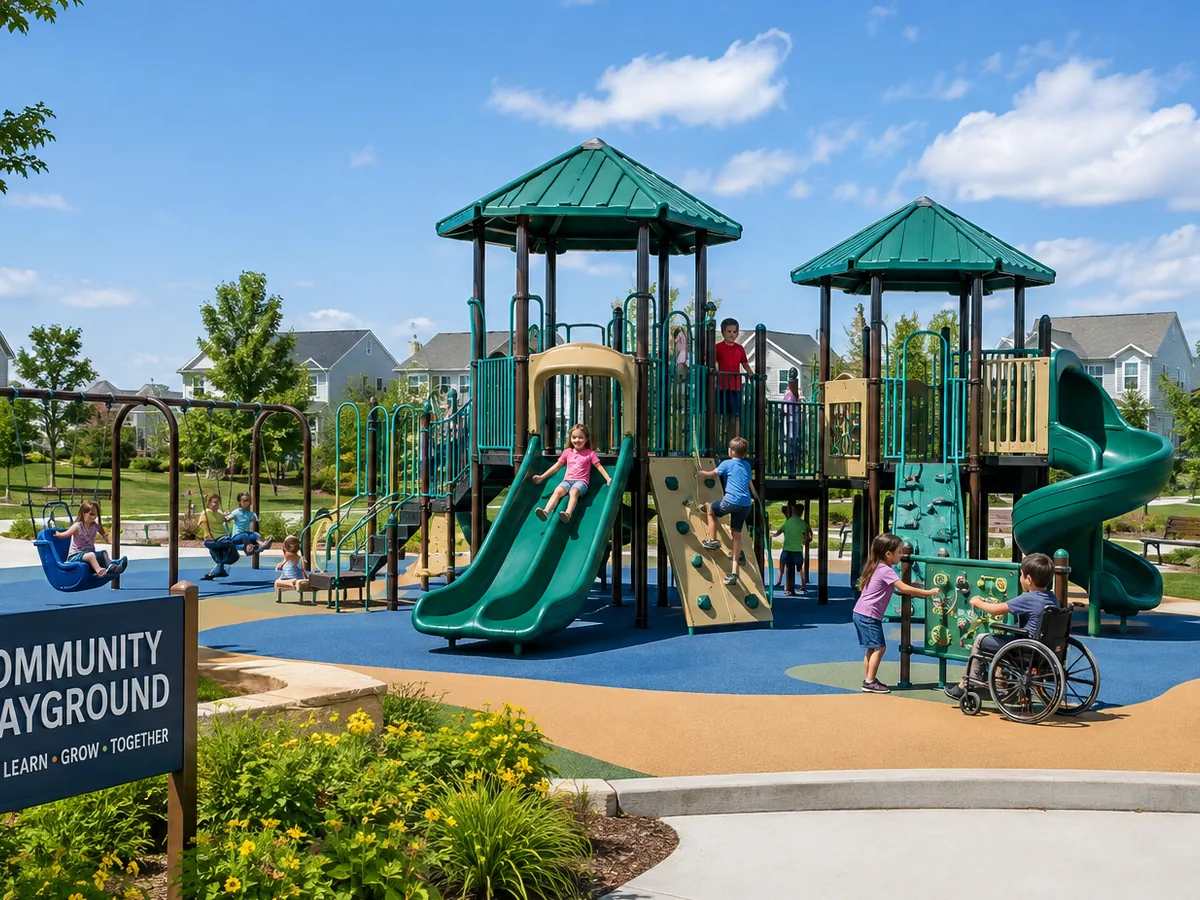
The same play structure can feel right in one community and wrong in another. We help narrow playground solutions by how the area will be opened, used and maintained.

These projects often need a neat play area with clear sight lines, moderate challenge, durable materials and a color plan that fits the housing environment.

City parks and public recreation areas may require broader age coverage, higher traffic planning, accessible play features, surfacing discussion and stronger document review.

A school yard opened to the community after class should consider school age movement, teacher view, public entry, locking points, weekend traffic and inspection routines.

A compact housing area often works better with fewer, clearer pieces: one main unit, a low slide, one climbing point, a few activity panels and a place where parents can stand or sit.

Accessible play does not mean one special panel added at the end. Access route, play value, group interaction, sensory options and seating should be considered together.

A custom playground system can use neighborhood colors, landmark themes, natural style, stainless slide elements or branded panels when the project needs a stronger identity.
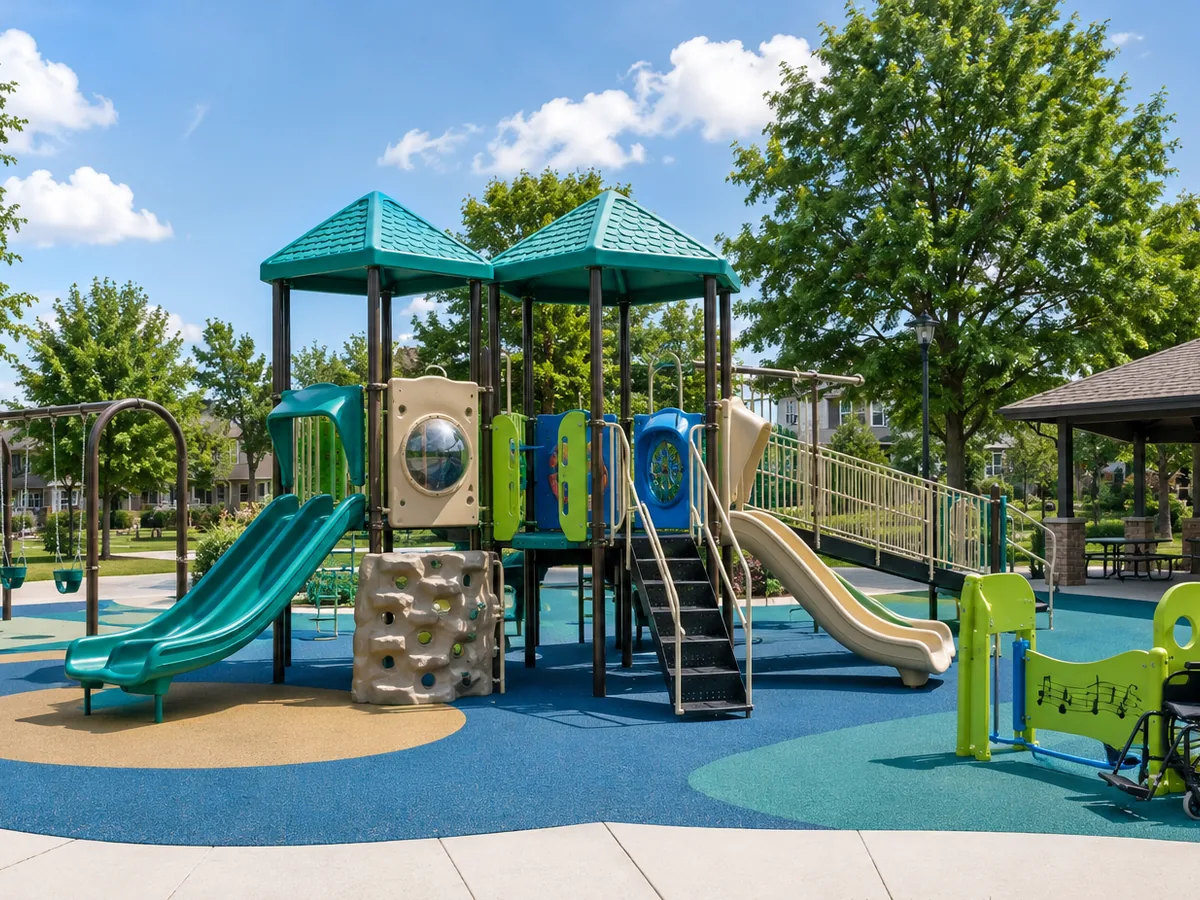
A community order often needs several people to approve it. The buyer may need product drawings, material notes, play equipment lists, packing information and document support before a final decision.
At the quotation stage, we can help organize equipment groups, slide and swing choices, climbing routes, inclusive play notes, color direction and shipping volume.
Before production, the final playground system should match the confirmed drawing, product list, material notes, colors, fasteners, labels and packing requirements.
Before shipment, buyers may ask for product group photos, hardware package photos, carton marks, selected inspection photos or loading records. These should be requested before packing starts.
A clear first file helps us prepare more useful playground designs and equipment suggestions.
Send playground area size, photos, ground condition, paths, gates and nearby limits.
Tell us age range, expected traffic, school age needs and accessibility goals.
Choose the play value you really need: climbing, sliding, swinging, sensory play, group play, pretend play or a quieter corner.
Review steel, plastic, rope, fasteners, surfacing discussion and maintenance access.
Finalize the playground system, product list, documents, packing notes and schedule.
FAQ for shared play equipment, accessible play, public play spaces and park and recreation projects.
Shared playground equipment is play equipment designed for neighborhoods, parks, HOA areas, housing developments, public play spaces and park and recreation projects. It may include slides, climbers, swings, transfer platforms, activity panels, accessible play items and larger play structures.
Send the playground area size, age range, expected user volume, project type, ground condition, photos of the space, budget direction, preferred equipment groups and any park and recreation or local approval requirements.
Community play areas often separate toddler, preschool and school age activity levels. Equipment design should match age range, movement ability, fall height, circulation, visibility and the desired play environment.
Yes. Inclusive play is not one special panel added at the end. It starts with the route into the play area, then ground-level activities, transfer points, sensory elements, group play and seating nearby.
Cost depends on the area size, equipment mix, materials, surfacing, accessible play items, custom theme work, shipping volume and document needs. Send the area size and age range first, then the quote can be narrowed with fewer guesses.
Send the playground area size, age range, expected use, photos of the space and any accessibility, park and recreation or document requirement. We will help you narrow the play equipment, materials and layout direction.