
School Outdoor Playground
School yards need clear routes, open supervision and durable parts for repeated use. The design should not trap children in one crowded corner during break time.
Outdoor and indoor play projects made in China.
Photos, rough sizes, or drawings are all usable for a first reply.

Outdoor equipment stays outside after the opening day. Sun, rain, dust, shoes, carts, and daily play all leave marks. So we look at the site first, then talk about the structure.
Send the site size, country, age group and a photo of the area. We will check the basic layout direction before quoting models, because the same slide or climbing frame can work well in one yard and feel crowded in another.
For school, park, hotel and community projects, tell us who will approve the layout and who will install the equipment. That changes the drawings and records you may need later.

Outdoor projects need space planning, material discussion, age range control and a practical installation path.
A catalog picture cannot show your gate, tree, wall, drainage line, walking path or ground slope. Those details decide where the play structure can sit and which parts need more space.
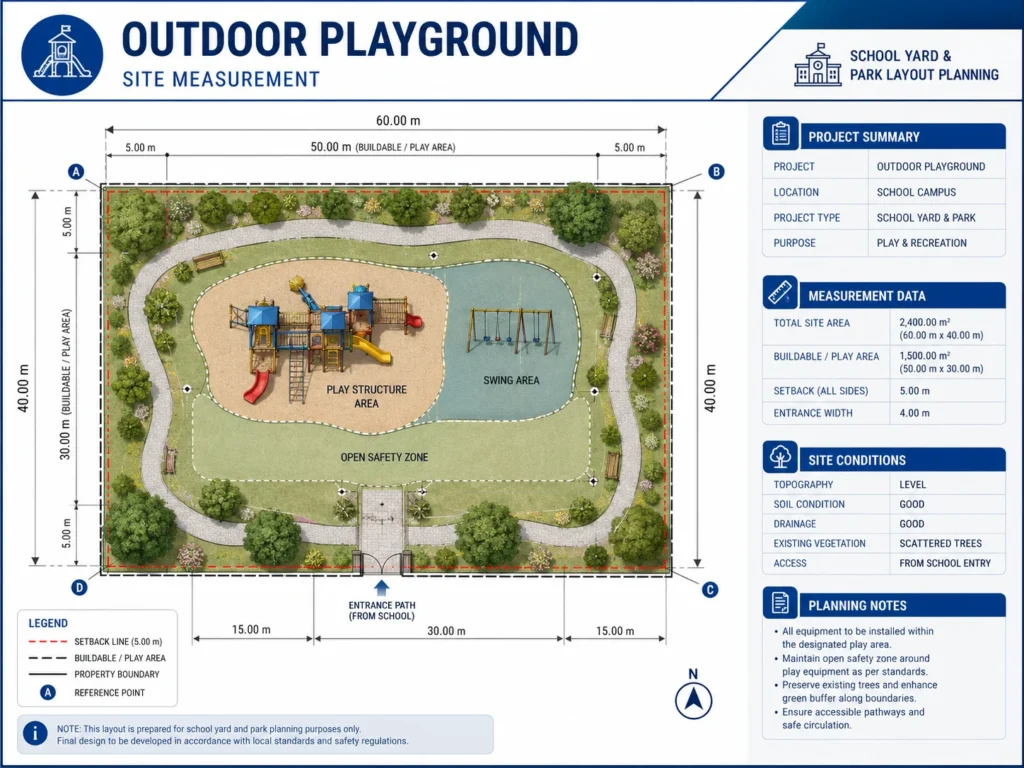
Send length and width first. Mark trees, lamps, drains, fences, gates, or paths directly on the photo. Those small blocked areas can change the layout.
A preschool yard and a community park need different height, climbing difficulty and movement route. The age group should be clear before the first layout is fixed.
Strong sun, coastal air, heavy rain, sand, snow or public daily use may change the material and surface discussion. One short weather note helps.
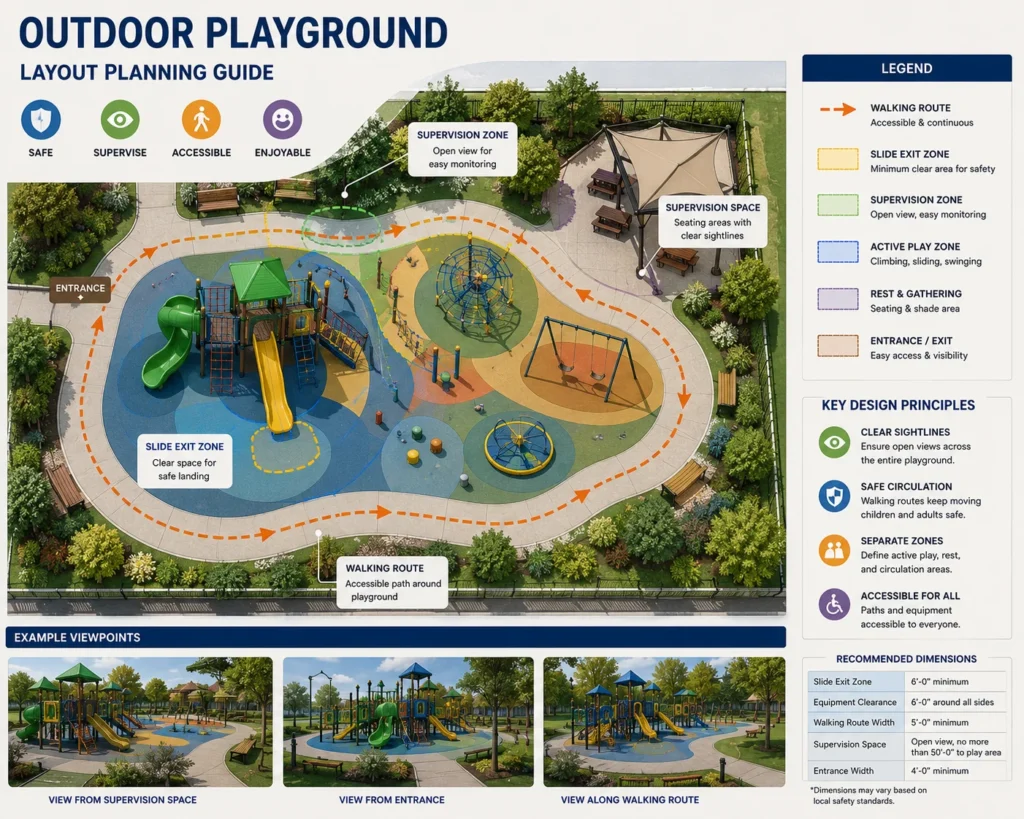
Slide exits, swing paths, climbing access and walking routes need space. A design that fills every meter can look full on paper and feel uncomfortable on site.
Outdoor projects are not one product group. The right direction depends on who will use the place and how the site will be managed after installation.
School yards need clear routes, open supervision and durable parts for repeated use. The design should not trap children in one crowded corner during break time.

Park sites often have wider exposure and mixed visitors. Strong visual design helps, but access, maintenance and public-use durability need equal attention.

Hotel playgrounds sit in a guest-facing space. The color, theme and surrounding landscape matter. The playground should feel planned, not placed as an afterthought.

Residential areas often need equipment that works for several ages. Parents may stay nearby, so the plan should leave clear viewing areas and safe walking space.

Theme work can use animals, forest ideas, local culture or a hotel identity. The theme is useful only when it still leaves a clean play route and practical structure.

Rope nets, bridges, climbing walls and balance routes need age-level planning. The difficulty should match the users, not just make the structure look bigger.
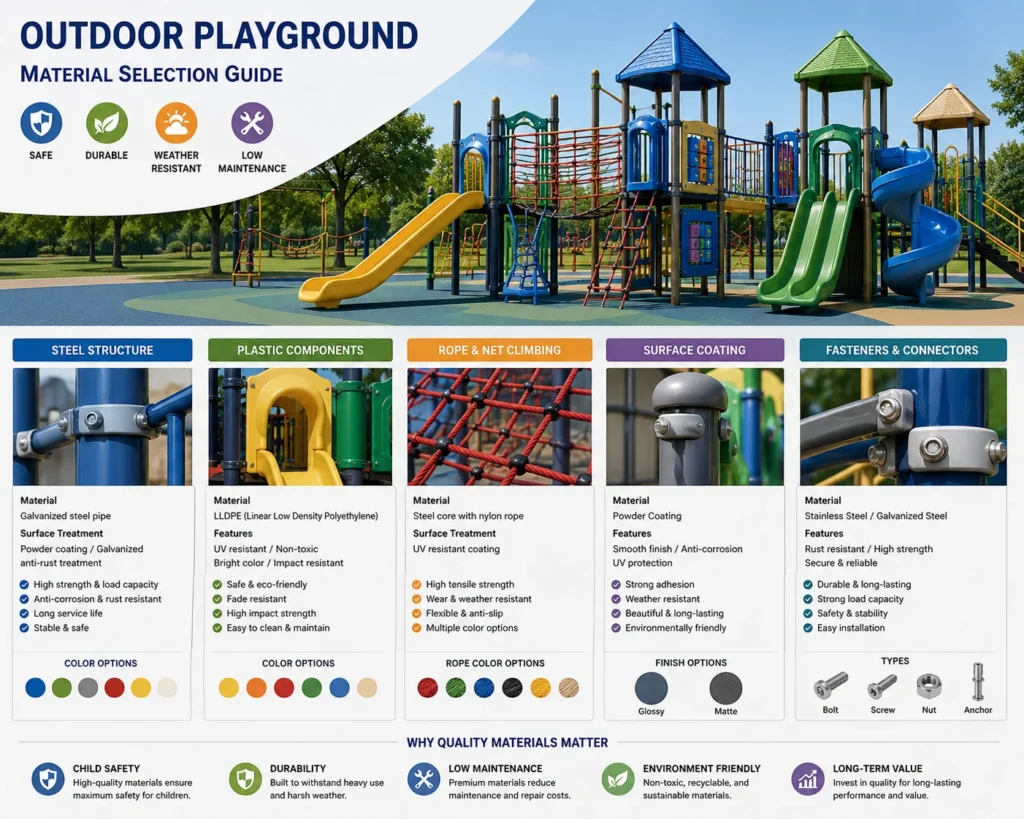
Outdoor equipment sees more abuse than an indoor play room. Heat, UV, rain, dust, cleaning, shoes and public use all leave marks. The material discussion should happen before the buyer falls in love with one picture.
Steel frame, plastic parts, rope nets, caps, fasteners and surface finish are reviewed according to the site. Powder-coated steel may work for many projects, while coastal sites may need a closer look at coating, bolts and maintenance expectations.
Molded plastic parts need a clean surface and stable color. Slides and panels receive more touch and sunlight, so the buyer should tell us if the area has strong sun or high public traffic.
For wooden-style or stainless steel designs, the conversation changes again. We discuss appearance, structure, transport and how the parts will be handled at the site.
A quote should not hide site conditions. If the ground, weather or use pattern is unusual, it is better to say it early.
| Site Condition | Why It Matters | What to Send |
|---|---|---|
| Coastal Air | Salt air can affect metal parts and fasteners faster than normal outdoor use. | Country, distance from sea, photo of the site and any maintenance expectation. |
| Strong Sun | Color, plastic surface and touch temperature become more important. | Climate note, shade condition and preferred color direction. |
| Heavy Public Use | Parts may see daily wear from children, parents and mixed visitors. | Project type, expected age group and whether the site is open to the public. |
| Small Yard | The equipment must leave space for movement, waiting and supervision. | Exact usable size, photo from each side and any blocked area. |
| Existing Surface | Concrete, rubber floor, grass, sand or prepared foundation can change installation planning. | Ground photo, surface material and whether local installers are already arranged. |
Outdoor layouts need breathing room. A playground can have slides, climbing routes and bridges, but children still need space to enter, leave, wait and run around without crossing every moving path.
Slide exit direction, swing movement, climbing access, entry point, walking route and supervision angle are checked in the early layout. If a school or community manager needs a clear view across the space, that should be marked before the structure is chosen.
For hotels or resorts, the surrounding area matters more. The playground should not block the main path, poolside route, garden view or guest traffic.
For public parks, access and maintenance are part of the layout. Leave space for people who are not playing: parents, cleaners, repair staff and visitors walking through the area.
The first quote is cleaner when the site facts are clear. The steps below keep the conversation practical.
Country, site size, user age group and outdoor photos open the project file.
We review weather, surface, space limits, access and use scene.
The buyer confirms play style, theme, material level and budget direction.
A suggested layout or product direction is prepared around the usable space.
The quotation follows the confirmed model, quantity, material notes and file needs.
These questions stay focused on outdoor playground equipment and outdoor site planning.
Send the site size, country, age group, ground condition, outdoor exposure, preferred play functions, reference photos and any requirement from the project owner. A rough photo is useful even when a full drawing is not ready.
Yes. For seaside sites, we check metal parts, coating, bolts, and later maintenance more carefully. Salt air is harder on outdoor equipment, so tell us early if the site is near the sea.
Most outdoor orders use a mix of steel frame, coated surface, molded plastic parts, ropes, nets, caps, and fasteners. Some projects also ask for stainless steel or wood-look parts. The site and budget decide the final choice.
Yes. Buyers can send site photos, measurements or drawings. The layout discussion should leave enough room for slide exits, walking paths, swing movement, access and supervision.
Yes. Theme, color, panel style and play route can be discussed. The design still needs to fit the site, user age group, material choice and installation plan.
Send the site size, country, age group and a few photos. Mark any trees, walls, gates, drains or existing floor conditions. We will review the outdoor project direction before quoting.