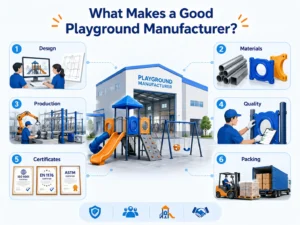

Before I compare playground equipment supplier prices, I put each offer beside the same site file and drawing. The supplier should first read the playground size, user age, route direction, material notes, document request, packing needs and delivery plan before recommending a model.
A playground order does not end when the buyer pays the deposit. The supplier still needs to confirm drawings, prepare materials, control production, pack small hardware, mark cartons, load the container and answer part questions after installation.
This supplier selection guide is written for buyers who are preparing playground orders for schools, kindergartens, parks, communities, resorts, indoor play rooms and commercial play areas.
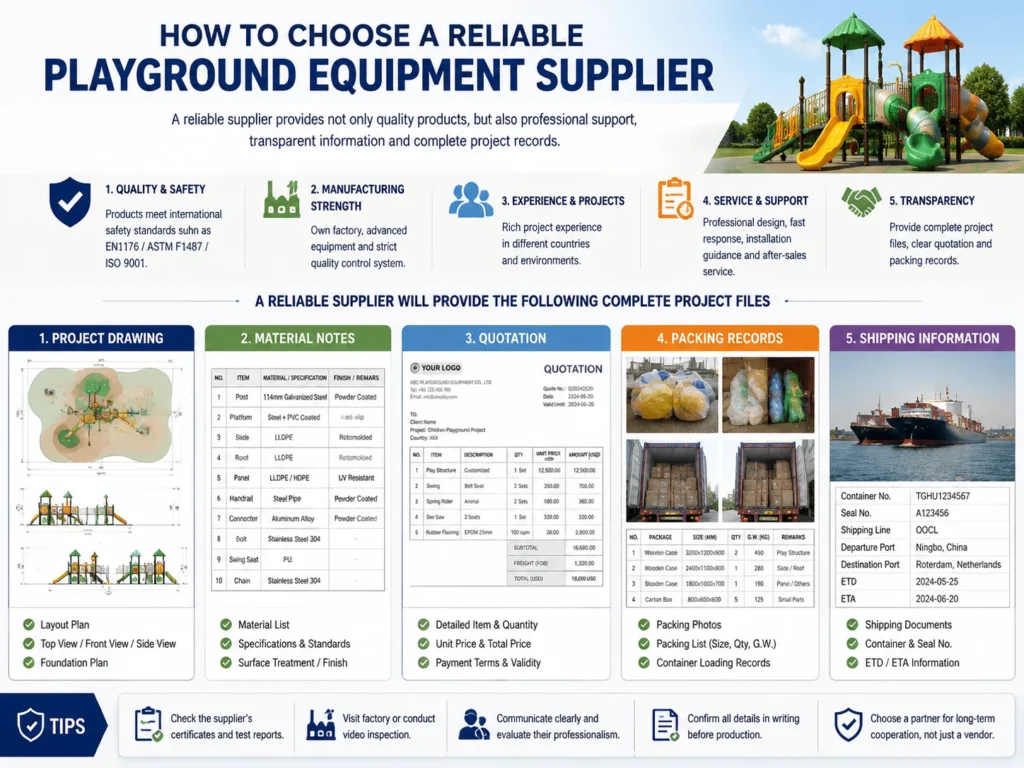
Supplier selection should be based on the same drawing, product list, material notes, document request and packing scope.
1. Start with the project file, not the catalog
The first useful question is whether the supplier asks for a real project file. A project file usually includes site size, site photos, target age group, project type, destination country, preferred equipment direction, surfacing plan and local document requests.
If a supplier sends a price before reading those details, the offer may be quick but weak. The product may not fit the site, the material may not match the weather, or the packing scope may be unclear when the goods arrive.
A supplier who asks for marked photos, drawing updates and age notes is not making the process slower. That supplier is trying to reduce mistakes before production.
For a full file structure, read the playground project file checklist and the complete playground planning guide.
A supplier who only compares photos may miss the real problem. A supplier who reads the site file can check whether the product will work after installation.
2. Check whether the supplier understands the site type
A school yard, kindergarten area, public park, hotel garden, community playground and indoor commercial room may all use slides, swings and climbing equipment. The planning logic is still different.
A kindergarten project may need low platforms and clear adult view. A park may need mixed-age movement and strong outdoor material notes. A resort may need a playground that fits the guest route. An indoor room may need ceiling-height, column and cleaning checks.
The supplier should ask which type of project is being built. If every project receives the same product suggestion, the buyer should slow down and ask how the layout was judged.
For project examples, review kindergarten playground design, school playground planning, park playground equipment guide and playground equipment for resorts and hotels.
3. Compare quotations with the same scope
A playground quotation is not useful unless the scope is clear. The buyer should check product list, drawing version, materials, color, hardware, packing, documents, trade terms, freight assumptions, installation support and spare part policy.
Two suppliers may quote the same playground name but include different parts. One may include hardware bag photos and carton marks. Another may only list the main product. One may discuss certificates early. Another may send document names after production.
Before deciding by price, place all quotations beside the same drawing. Mark missing items line by line. That simple check can show why one offer looks cheaper.
For cost control, read playground equipment pricing guide, playground equipment MOQ guide and commercial playground budget guide.
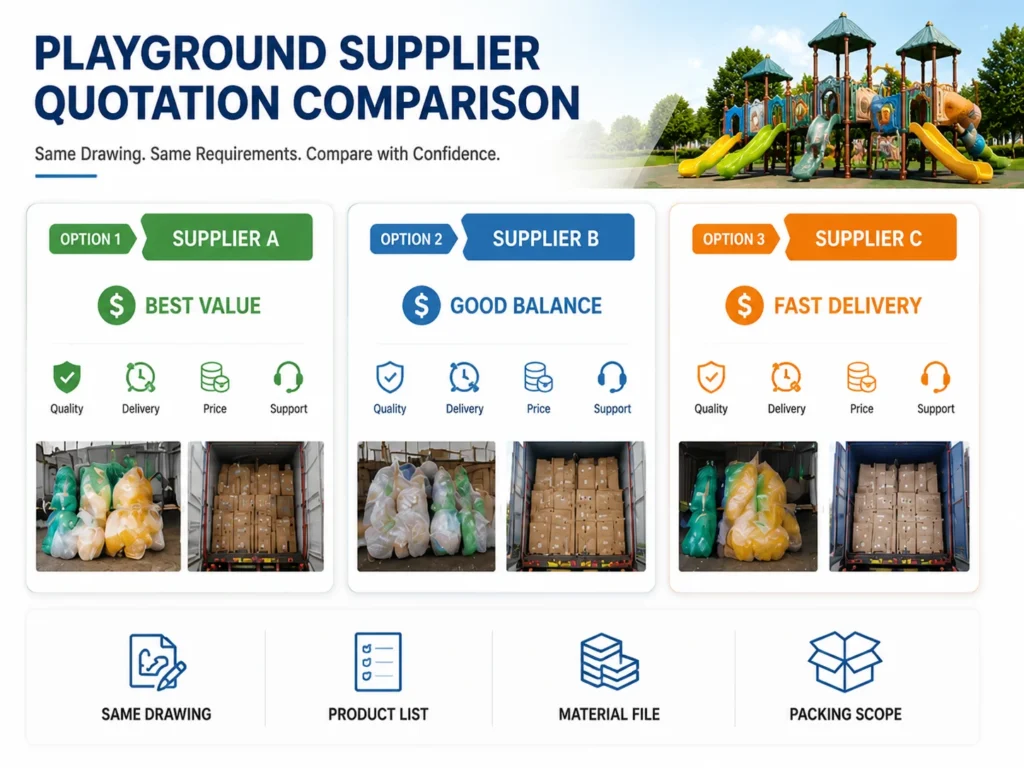
Quotation comparison is clearer when every supplier uses the same site drawing and product scope.
4. Ask for material notes by actual part
A reliable supplier should be able to explain material details by part. Steel posts, plastic slides, rope nets, stainless slide sections, foam, PVC cover, fasteners, caps, anchors and coating should not be hidden under one broad material word.
Outdoor sites need weather-related discussion. Sun, rain, dust, high traffic and coastal air can affect frame treatment, fasteners, ropes and surface maintenance. Indoor rooms need cleaning, padding, cover seams, room height and net fixing details.
Part-level material notes help the buyer compare suppliers and help the factory prepare quality records. They also help the owner later when a replacement part is needed.
For deeper material review, read the ultimate playground materials guide, best materials for outdoor playgrounds and soft play materials guide.
5. Discuss certificates before production
Certificate and test report discussion should happen before production starts. The supplier should know the destination country, product type, material scope, platform height, surfacing plan and any local approval request.
A document copy should be checked against the product it supports. Ask which model, material, date, scope and market the file relates to. Do not assume a certificate name covers every item in a mixed playground order.
If the project mentions EN 1176, ASTM, fall height or surfacing, keep those notes with the drawing and product list. That gives the buyer, supplier, importer, installer and local reviewer one file path.
For document checks, review playground safety standards guide, EN1176 vs ASTM playground standards and certificates.
6. Look for quality records, not only clean words
Quality control should leave something the buyer can review. Useful records include material confirmation, steel frame photos, plastic part checks, rope net fixing photos, soft play cover checks, trial assembly notes, hardware bag photos and carton marks.
A supplier who keeps these records can answer practical questions after shipment. If the installer cannot identify a frame part or missing cap, the supplier can compare the photo with the original packing file.
For repeat buyers, quality records also help compare one order with the next order. That is important for distributors, contractors and commercial operators who need stable product details.
For quality work, read playground quality control checklist, playground factory inspection guide and playground quality and safety.
7. Review packing and hardware control
Packing control is one of the easiest ways to judge order discipline. Playground goods include large posts, slide sections, panels, soft play parts, ropes, caps, bolts, washers, anchors and other small hardware.
The supplier should explain how hardware bags are grouped, how cartons are marked, how frame parts are labeled and whether packing photos can be provided before shipment.
This work helps the local installer. It also helps after-sales support if a buyer reports a missing accessory or asks for a replacement part months later.
For shipment records, read playground container loading guide and how to import playground equipment from China.
8. Check after-sales support before the deposit
After-sales support should not be discussed only after a problem appears. Ask the supplier how it names parts, stores final drawings, saves packing photos and handles replacement requests.
The answer shows whether the supplier can support the order after delivery. A factory or supplier with clear records can identify swing seats, caps, rope parts, soft play covers, slide pieces and hardware faster.
If the supplier does not keep order files, spare part support may rely on guessing from photos. That can slow repair work and create extra cost for the buyer.
For maintenance records, review how to maintain playground equipment.
9. Decide whether you need a factory, local supplier or both
Some buyers work directly with a China playground manufacturer. Others buy through a local supplier or contractor. Both routes can work, but the buyer should know who handles each responsibility.
A China factory may control production, material files, packing records and export shipment. A local supplier may help with ground work, installation, local inspection and service near the site.
Before choosing the route, write down who handles drawing approval, surfacing, unloading, installation, local documents, spare parts and maintenance. The supplier choice should match those responsibilities.
For this comparison, review China playground manufacturer vs local supplier and the playground manufacturer selection guide.
Playground supplier selection checklist
Before choosing a playground equipment supplier, check these items:
- Project type, site size and destination country are reviewed
- Supplier asks for site photos or drawing before final quotation
- Product list follows the current drawing version
- Material notes are written by actual part
- Certificate and report scope are discussed early
- Quotation shows included and excluded items
- Production and quality records can be provided
- Hardware bags and carton marks are controlled
- Packing and loading photos are available
- Spare part and maintenance support are explained
Manufacturer review:
What makes a good playground manufacturer
Buying pillar:
Complete buying guide
Project file:
Project file checklist
Materials:
Ultimate materials guide
Conclusion: choose the supplier who controls the file
A supplier is easier to trust when the order file stays clear from quotation to shipment. Product photos and price still matter, but the stronger sign is whether the supplier can match the site file, drawing, product list, material notes, document discussion, production records and packing details.
When those records are clear, installation and after-sales work become easier. The buyer can compare offers with fewer hidden gaps and move into production with better control.
If you are comparing playground equipment suppliers, send us the project type, site drawing, photos, age group, destination country, material concerns, document requests and delivery timing. We can review the file before quotation.
FAQ
What should buyers check before choosing a playground equipment supplier?
Buyers should check the supplier’s project file review process, drawing support, product scope, material notes, certificate discussion, quality records, packing method, shipment records and after-sales part support.
How can buyers compare playground equipment quotations fairly?
Use the same drawing, product list, age group, material direction, document request, packing method, delivery terms and installation scope for each supplier. Then compare what is included and what is missing.
Is the lowest playground equipment price always the best choice?
No. A low price may exclude material details, hardware records, packing photos, certificate discussion, freight assumptions or spare part support. The price should be read beside the full order scope.
What documents should a supplier prepare before production?
Useful documents include the approved drawing, product list, quotation scope, material notes, color confirmation, certificate or report discussion, production schedule and packing record plan.
Why are packing records important when choosing a supplier?
Packing records help the installer identify frame parts, slide sections, hardware bags, caps and small accessories after the goods arrive. They also help the supplier answer missing-part or replacement-part questions faster.