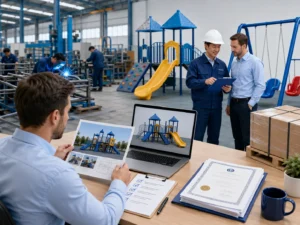
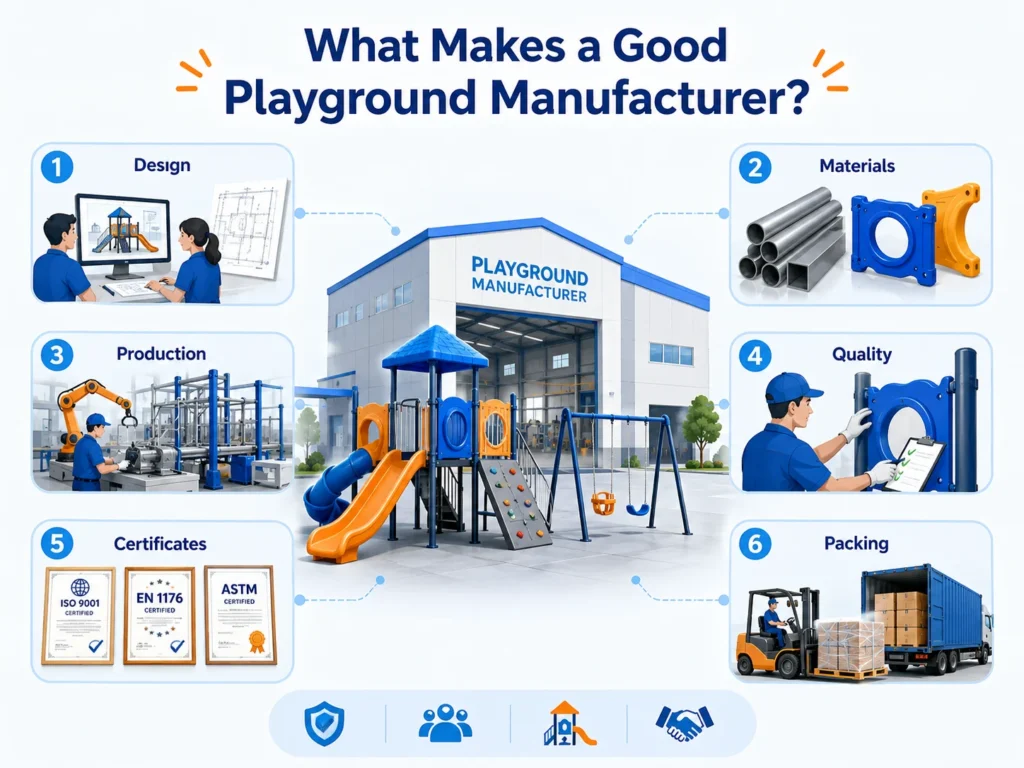
A playground manufacturer should be checked from the order file, not only from the catalog cover. The first product photo can show style, color and play direction, but it does not show how the factory reads the site, confirms materials, controls production or prepares the shipment.
When buyers compare manufacturers, the useful signs often appear in small places. One factory asks for the site size before quoting. Another asks about the age group, installation country and safety documents. A weaker supplier may send a price list before reading the project. That difference matters after the order moves into drawings, packing and installation.
This article explains what buyers should check before choosing a playground equipment manufacturer. It follows the same kind of questions buyers often ask during real school, park, hotel, community and commercial playground orders.
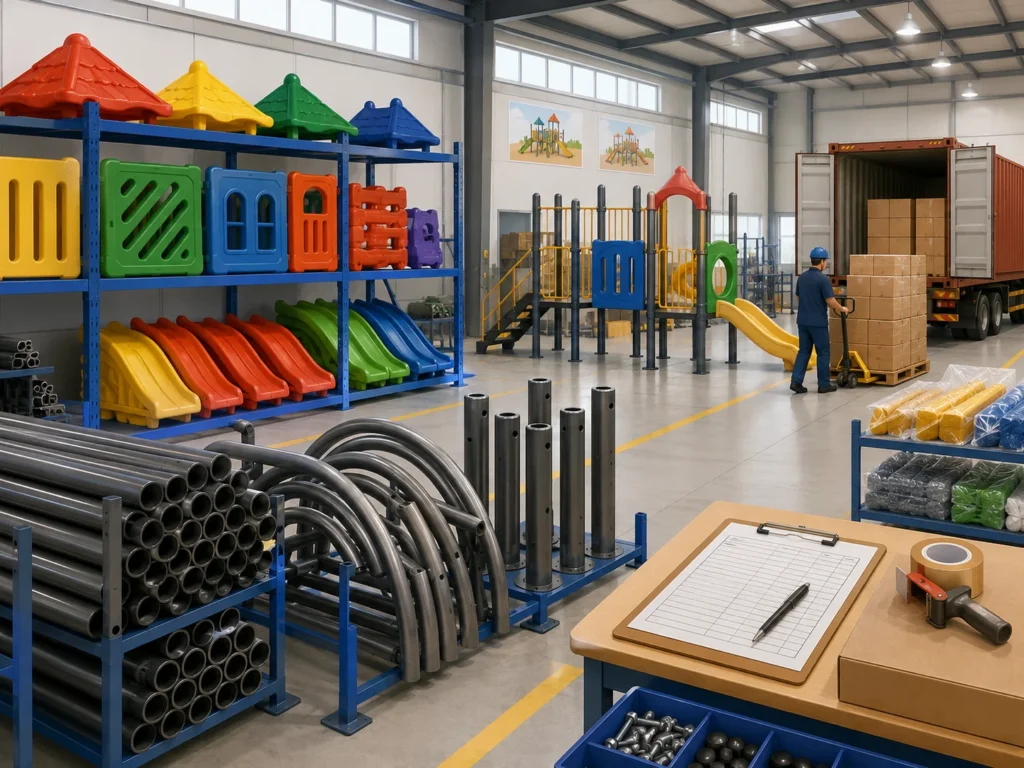
A good manufacturer should be able to connect the product picture with drawings, materials, production checks and export packing records.
1. A good manufacturer reads the project before quoting
A fast quote is not always a useful quote. For a playground project, the factory needs to know more than the model name. Site size, age group, installation condition, destination country and project type can all change the product list.
For example, a school playground may need open supervision and clear routes. A park project may need stronger outdoor material discussion. A hotel garden may need color matching and family use planning. A commercial indoor play area may need traffic flow, cleaning access and soft protection.
A manufacturer who asks these questions is not slowing the buyer down. In most cases, the factory is trying to avoid the wrong product direction before the quotation becomes a serious number.
You can review our general manufacturing position on the playground equipment manufacturer. That page explains the product range and project types we usually discuss before an order is confirmed.
A good early question from a manufacturer is not only “Which model do you like?” It is also “Where will this equipment be installed, and who will use it?”
2. Factory records say more than factory slogans
Many suppliers call themselves factories. Buyers still need to check what kind of factory information is available. Real production records may include workshop photos, material areas, welding sections, assembly checks, hardware bags, carton marks and loading notes.
These details may look ordinary, but they show how the manufacturer controls the order. If a drawing changes or a carton mark needs to be checked, the factory should know where that information is recorded.
Factory size can help, but size alone is not enough. A large workshop still needs order control. A smaller but organized production team may handle project details better than a bigger factory with weak communication.
Buyers can check our factory-related information on the playground equipment factory. The purpose is to show how production and order handling connect, not only to show a building.
3. Material explanation should be clear enough for buyers
A good manufacturer does not hide behind technical words. Steel posts, plastic slides, rope nets, fasteners, coatings, foam, PVC covers and soft edges should be explained in a way the buyer can use.
When a buyer asks why one design costs more than another, the answer should not be vague. The difference may come from structure size, material choice, platform height, coating, slide type, rope route, indoor padding or packing needs.
Material discussion also needs to follow the project. A seaside outdoor site may need more coating attention. A kindergarten area may need lower platforms and softer colors. A commercial indoor room may need more focus on foam, PVC cover and cleaning routes.
We keep a separate playground equipment materials for this reason. Buyers can use it to check material groups before comparing quotations.
For buyers who want a broader material overview, we also explain this in the blog article about materials used in modern playground equipment.
4. Safety checks should connect with the real product
A playground manufacturer should understand safety as part of the design, not as a single sentence in a sales reply. Platform height, slide exit, climbing route, swing space, edges, fasteners and ground condition can all affect the final project.
Certificates are useful, but they should match the product being discussed. One document may show a management system. Another may relate to a certain structure, material group or test item. Buyers should ask which file applies to the order, especially for public or commercial projects.
A good manufacturer will not treat safety questions as trouble. The factory should be able to explain which checks happen before production, during assembly and before packing.
You can review our safety-related pages here: playground quality control and playground certifications.
5. Custom ability should be checked with real site notes
Many buyers ask whether a manufacturer can make custom playground equipment. The answer should not stop at “yes.” Custom support depends on how the factory reads the site, drawing, reference photo, color direction, material choice and packing request.
A custom theme playground may include special panels, non-standard routes, changed platform height, stainless steel slides or mixed materials. These details should be checked before production starts. If the order file is not clear, a custom project can become difficult to control.
A manufacturer with real custom experience will usually ask for site size, use group, reference photos and installation condition. The factory may also ask which parts must follow the reference photo and which parts can be adjusted for safety or production.
For more custom discussion, buyers can review the custom playground equipment
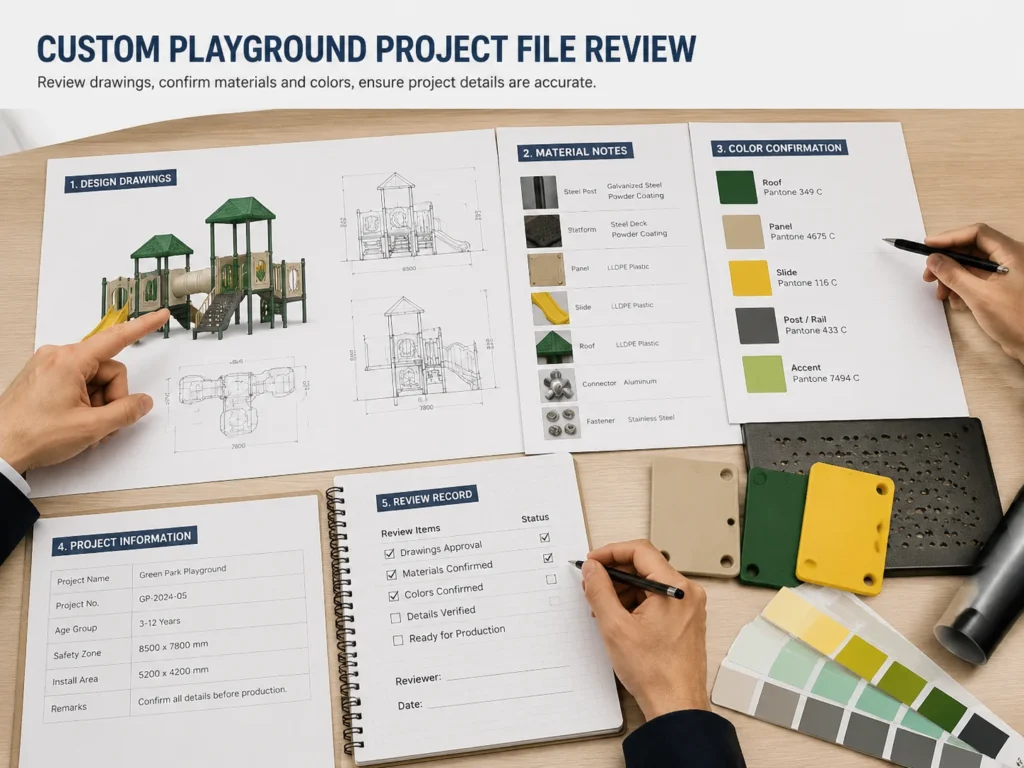
Custom support depends on drawing control, material confirmation, color notes and production records.
6. Production process should be traceable
After an order is confirmed, the factory should not rely on memory. Drawings, material notes, color records, hardware bags, carton marks and loading plans should move through the order file.
This is where many export problems begin. A color note is missed. A hardware bag is not marked clearly. A drawing version is not checked again. These problems may look small inside the factory, but they can delay installation at the site.
A good manufacturer should explain how the order moves from confirmed design to material preparation, production checking, packing and shipment. The buyer does not need to manage each step, but the factory should be able to show what was checked.
You can review the related workflow on the playground manufacturing process page. We will also cover this topic in more detail in the blog about how playground equipment is manufactured.
7. Project references show whether the manufacturer has real experience
Project photos should not be used only as decoration. They help buyers see whether the manufacturer has handled different site types. A school playground, public park, hotel garden, community space and indoor commercial room do not have the same requirements.
When reviewing project references, buyers can look at the route, equipment type, age match, material direction and surrounding space. The question is not only whether the playground looks good. It is whether the manufacturer understands that type of site.
A manufacturer with real project records should be able to discuss what kind of project was involved and what details needed attention. Private customer information does not need to be shared, but the project logic should be clear.
You can view our project direction page here: playground projects.
8. Export support should include packing and after-sales records
For international buyers, the order does not end when production is finished. Packing, hardware bags, carton marks, loading photos and spare part records become important before and after shipment.
If a buyer later asks for one replacement panel, one connector or one cap, the manufacturer should be able to trace the original order. This is much easier when the factory keeps drawings, color notes, material records and packing photos.
Distributors and contractors need this support even more. Their customers may return months later with a question about one part. If the manufacturer has no order record, a small request can become slow.
Buyers who are still comparing suppliers can also read our article on choosing a reliable playground equipment supplier for a more detailed supplier-checking process.
Conclusion: a good manufacturer reduces order risk
A good playground manufacturer is not judged by one catalog page or one low price. The better signs appear through project questions, material explanation, factory records, safety checks, production control, project references and export support.
When buyers compare manufacturers, they should check how each factory reads the project file. A manufacturer who understands the site, age group, material needs and shipment details can reduce many problems before they appear.
If you are comparing playground manufacturers for a school, park, hotel, community or commercial project, send us the site size, age group and reference photos. We can help review the order direction before quotation.
FAQ
What should buyers check in a playground manufacturer?
Check factory records, material explanation, drawing review, safety files, production process, packing records, project references and communication before choosing a manufacturer.
Is factory size enough to judge a playground manufacturer?
No. Factory size helps, but buyers also need to check order control, material handling, inspection records, customization ability, packing details and after-sales support.
Why do project references matter when selecting a manufacturer?
Project references show whether the manufacturer has handled real school, park, community, hotel or commercial playground orders instead of only catalog product photos.
Can a good playground manufacturer support custom projects?
Yes, but custom support should be checked through site notes, drawings, reference photos, age group, theme direction, material confirmation and packing needs.
What documents should buyers ask a playground manufacturer for?
Depending on the project, buyers may ask for certificate files, material notes, drawing confirmation, packing photos, carton marks, loading photos and quality check records.