
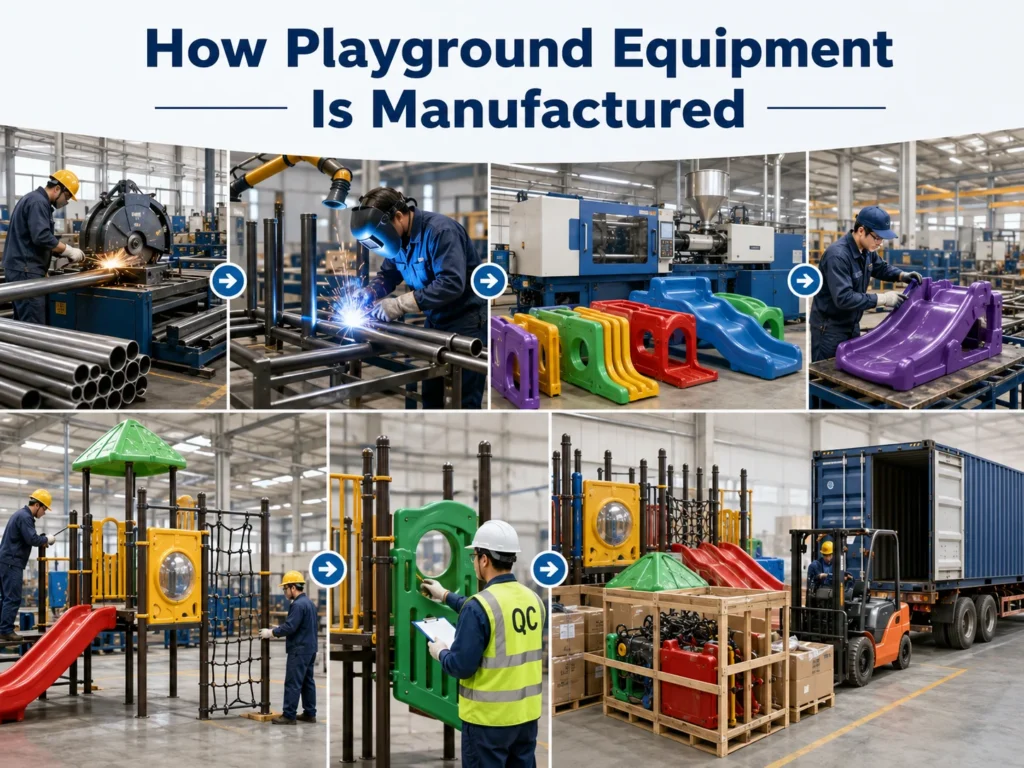


Playground equipment manufacturing starts before steel is cut or plastic parts are packed. In a real order, the factory first has to read the project file. The site size, product list, drawing, age group, material notes, color direction and packing request all need to be clear enough for production to follow.
Buyers sometimes think production begins after the deposit is paid. Inside the factory, that is only partly true. If the order file still has an old drawing, unclear color note, missing hardware request or changed slide direction, the production team needs to stop and confirm it before the mistake becomes physical goods.
This article explains how playground equipment is usually manufactured from project review to material preparation, fabrication, checking, packing and shipment. It is written for buyers who want to understand what happens after quotation approval.
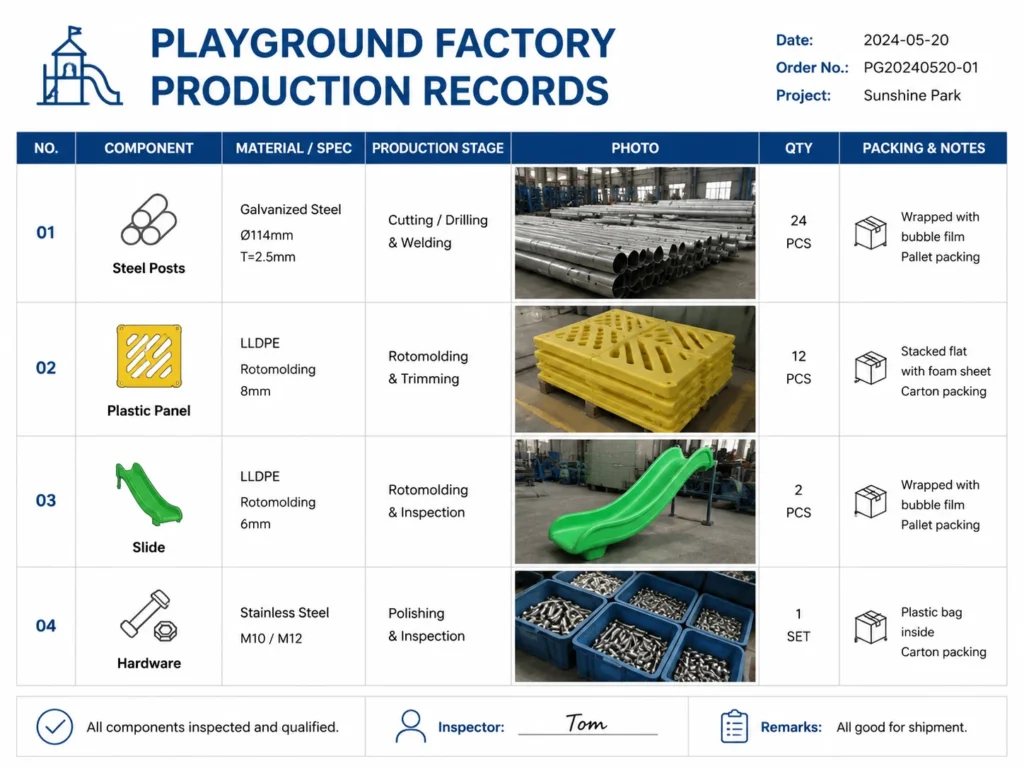
Manufacturing is easier to control when drawings, material notes, color records, hardware bags and packing details stay in one order file.
1. Order file confirmation comes before production
The first factory step is not cutting, welding or packing. It is checking whether the order file is ready. A normal playground order may include a quotation sheet, product list, drawing, reference photo, color note, material requirement, packing mark and shipment instruction.
For a standard product, this step may be short. For a custom playground or site-based project, it may take more discussion. The factory needs to know which parts follow the catalog, which parts were adjusted, and which details must be confirmed by the buyer before production.
This is also where many small risks can be removed. If the buyer sent a new layout but the old drawing is still attached, the factory should catch it. If the carton mark changed, someone should record it. If the project needs a certain certificate file, that note should not appear only after the goods are finished.
You can review our general workflow on the playground manufacturing process page.
Before production starts, a useful question is: does the factory have one clear version of the drawing, product list, color note and packing request?
2. Material preparation follows the confirmed project
Material preparation should follow the confirmed order, not a general product photo. Steel posts, plastic slides, panels, rope nets, fasteners, coatings, foam and PVC covers all need to match the project type.
An outdoor park, a school playground, a kindergarten corner and an indoor soft play room do not use materials in the same way. Outdoor equipment may need more attention on surface treatment, UV exposure and hardware. Indoor equipment may need more attention on padded edges, soft covers and cleaning.
For steel parts, the factory checks the structure and planned use before moving into fabrication. For plastic parts, color, shape and surface condition need to match the order. For rope and net areas, age group and route direction should be checked again because these parts affect how children move through the play area.
Buyers can read more about this topic on the playground materials page.
3. Steel work, plastic parts and soft play parts are handled differently
A playground is not one single material. Outdoor equipment often includes steel structures, plastic slides and panels, climbing parts and hardware. Indoor equipment may include foam, PVC covers, soft posts, nets, ball pit parts and activity modules.
Steel work usually focuses on structure, cutting, welding, drilling, surface treatment and coating. The details depend on the design and the site. A simple slide unit and a large climbing frame do not need the same handling.
Plastic parts usually come from molded components. Before they are used in an order, the factory checks the type, color and condition of the part against the product list. If a theme panel or slide color has been changed for a project, this record should be visible before packing.
Soft play parts are usually made around room layout. Foam, PVC cover, netting and padded shapes must follow the confirmed drawing. A wrong size in a soft play frame can affect the route inside the room, not only the appearance.
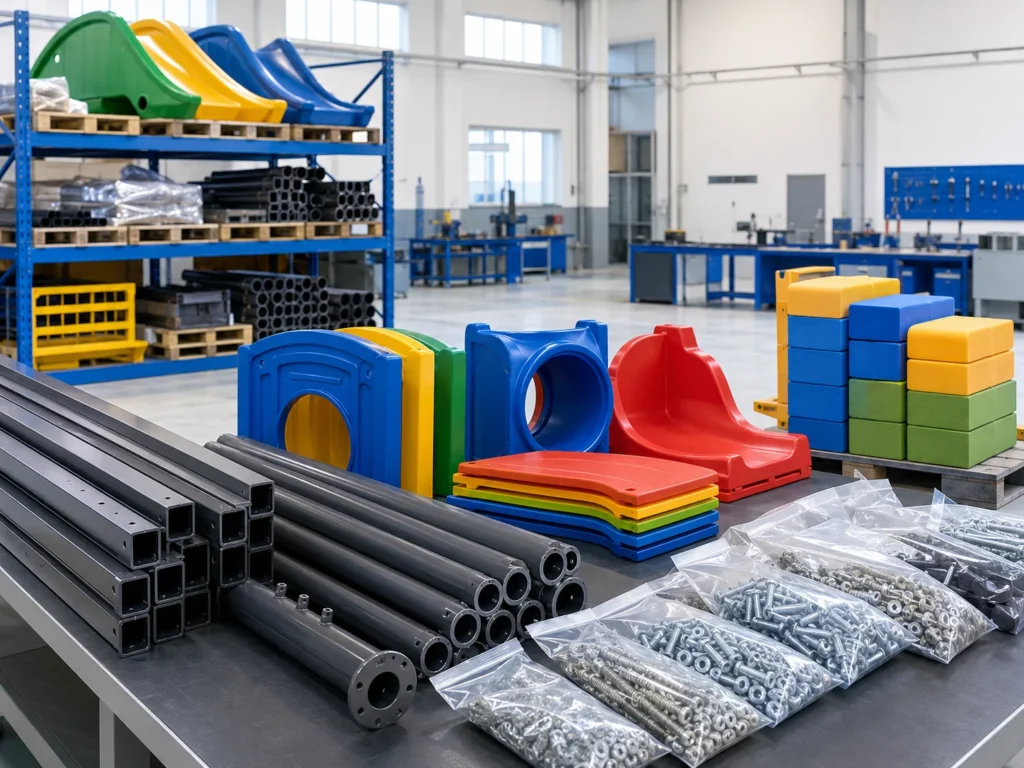
Different material groups need different checks before they enter final assembly or packing.
4. Custom playground projects need extra drawing control
Custom projects usually carry more risk than standard catalog orders. The buyer may send a reference photo, then ask for a different size, new color, special theme panel, changed route or stainless steel slide. Each change needs to be recorded clearly.
The factory should check which parts are custom and which parts use standard production. This matters for cost, production time, packing and later replacement parts.
For a custom playground, the drawing is not just a sales image. It becomes a working file for production. If the drawing does not match the product list, someone needs to correct it before the order moves forward.
You can review how custom projects are discussed on the custom playground equipment page. That page is useful for buyers who have a theme direction, special site condition or non-standard layout.
5. Checking during production is part of the workflow
Quality control should not wait until the goods are already packed. During production, the factory may check structure, surface condition, color, key dimensions, hardware matching and product list consistency.
For some orders, the factory may also check important connection points or trial assembly areas. Not every standard order needs a full trial setup, but custom structures and changed layouts should be reviewed more carefully.
The purpose is simple: find problems when they can still be corrected. A wrong color panel is easier to fix before packing. A missing connector is easier to add before the carton is sealed. A drawing mismatch is easier to solve before the container is loaded.
Buyers can review related information on the quality inspection process page. That page separates material checks, structure checks, edges, fasteners and packing records.
6. Packing turns production into an installable order
Packing is not only wrapping finished products. For export playground orders, packing decides whether installers can find the correct parts when the goods arrive.
Carton marks, hardware bags, labels, part grouping and loading records are all useful. A playground may include many posts, panels, slides, caps, bolts and connectors. If those parts are packed without clear marks, the installation team may waste time sorting parts at the site.
Good packing records also help after-sales support. If one part needs to be replaced later, the supplier can check the original order file, carton mark and part record instead of guessing from an old photo.
Buyers who care about shipment control should ask for packing photos, carton mark photos and loading photos before the order leaves the factory.
7. Shipment review should connect with the buyer’s project file
Before loading, the factory should check whether the order is ready for shipment. This review may include product quantity, hardware bags, carton marks, packing photos, loading plan and shipping notes.
For mixed orders, this step is especially important. A container may include outdoor playsets, swings, climbing parts, soft play items and spare parts. If the buyer is a distributor, the goods may need to match several customer projects in one shipment.
Shipment review also matters for future communication. If the buyer asks about one carton or one accessory after arrival, the factory should have enough information to trace it.
You can review factory and project record pages together: playground equipment factory and playground project records.
Conclusion: manufacturing is order control, not only production
Playground equipment is manufactured through more than workshop activity. A good process starts from the order file, then moves through material preparation, fabrication, checking, packing and shipment.
For buyers, the key point is simple. The factory should be able to show how project information is carried through production. If drawings, materials, colors, hardware and packing details stay clear, the order becomes easier to install and easier to support later.
If you are preparing a playground project and want to discuss production details, send us the site size, product direction, material notes and reference photos. We can help review the order file before production.
Discuss production details with our team
FAQ
What is the first step in playground equipment manufacturing?
The first step is usually order file confirmation. The factory checks site notes, product list, drawing, color direction, material requirements, packing needs and any safety or certificate notes before production.
Why does material preparation matter before production?
Material preparation affects structure, appearance, safety and later installation. Steel posts, plastic parts, rope nets, fasteners and soft play materials should match the confirmed order file.
Does every playground order need trial assembly?
Not every standard order needs full trial assembly, but important structures, custom parts and changed layouts should be checked carefully before packing.
What should buyers ask before shipment?
Buyers can ask for packing photos, carton marks, hardware bag records, loading photos and confirmation that key parts match the final order file.
How does the manufacturing process affect installation?
Clear production and packing records help installers identify parts, hardware and layout direction faster. Missing records can slow installation even when the products are finished.