
Soft Play Blocks
Foam blocks, ramps, steps and small shapes work well in toddler rooms and small hotel corners. They are simple, low and easy for adults to watch.
Outdoor and indoor play projects made in China.
Photos, rough sizes, or drawings are all usable for a first reply.

Soft play equipment is touched from every side. Children crawl on it, climb over it, sit on it, pull the cover, drop balls into corners and run back to the same slide many times.
Send the room size, clear height, age group and photos from each corner. We will check the soft play mix, ball pit position, wall padding, cleaning gaps, parent view and entrance route before quoting.
A small hotel corner and a paid play center need different soft play planning. Tell us how the room will be used before choosing the product list.

Foam, cover, seams, ball pits and soft blocks should fit the room, age group and cleaning routine.
A soft play quote is much easier when the room is clear. A column, door, glass wall, fire exit or low beam can change the whole layout.
Measure to the lowest beam, pipe or ceiling part. Soft play frames, net routes and small slides must fit that real height.
Mark doors, columns, windows, glass walls, counters and fire exits. Soft play cannot block the parts your staff needs every day.
Toddler rooms need lower pieces and more open view. Older children may need a stronger route, but still within the room limits.
Ball pits, tunnels and low corners collect dust and small items. Keep enough access so the operator can clean without taking the whole room apart.
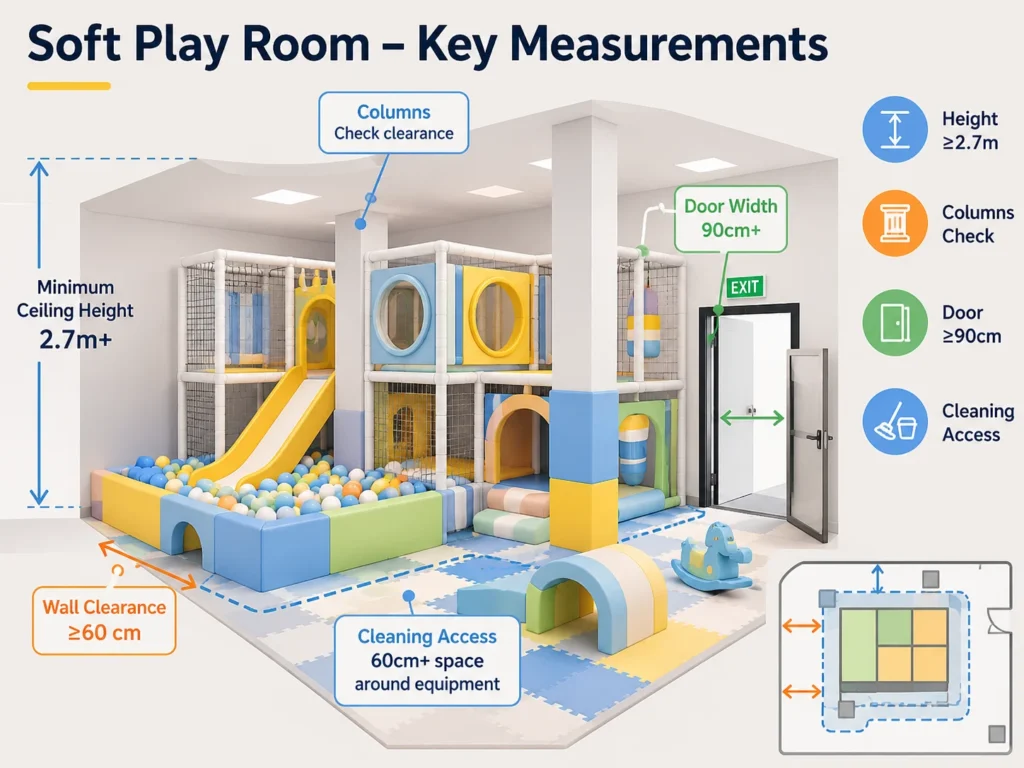
Soft play can be a small toddler corner or a full indoor room. The right mix depends on age, floor size, clear height and how the operator will manage the room.
Foam blocks, ramps, steps and small shapes work well in toddler rooms and small hotel corners. They are simple, low and easy for adults to watch.

Ball pits attract younger children, but they need clear access and a cleaning plan. The edge height, entrance and nearby slide should be checked together.

A padded frame can include crawl spaces, low slides, small obstacles and netted routes. The frame should follow the room height, not only the catalog photo.

Toddler zones use lower steps, smaller slides, rounder shapes and more open sight lines. They should be easy for adults to enter and help.

Small houses, shop counters, kitchen corners or traffic themes can add play value without much height. These areas work well in hotels and restaurants.

Wall padding, post padding and soft edges help the room feel finished. They are also useful around ball pits, ramps and busy toddler areas.
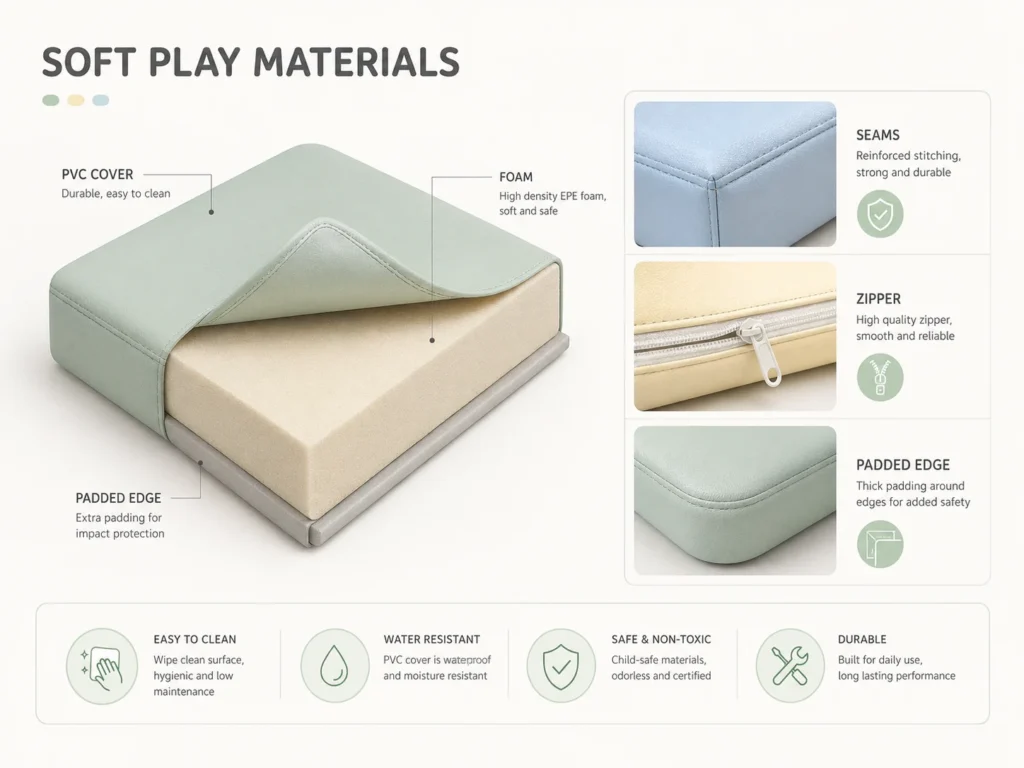
Soft play parts look simple from far away. Up close, the cover, foam, seams, zippers and corners decide how the product feels in daily use.
Foam density, PVC cover, surface finish, stitched edge, zipper position, color and shape size can be discussed according to the order. A public play center and a small private kids room do not need the same level of use planning.
Corners and seams matter because children rub against them many times a day. If a part will sit at an entrance, slide exit or ball pit edge, tell us before the final layout is confirmed.
If the operator has a cleaning routine, cleaning chemical note or building rule, send it early. It helps us avoid shapes that look nice but are hard to keep clean.
The price changes when the room size, material level, ball pit size, theme work or padding area changes. These notes help us quote with fewer guesses.
| Soft Play Detail | Why It Matters | What to Send |
|---|---|---|
| Room Size | Controls the layout, product quantity and walking space. | Length, width, clear height and photos from each corner. |
| Age Group | Changes slide size, block height, route difficulty and padding plan. | Toddler, preschool, mixed age or commercial age range. |
| Ball Pit | Size, edge height, access and cleaning plan affect the design. | Preferred ball pit size, shape and connection to other play parts. |
| Theme and Color | Custom color or theme panels affect material, printing and production time. | Reference image, color note, logo file or room style photo. |
| Padding Area | Walls, posts, corners and edges may need extra soft covering. | Photos showing walls, columns, glass and hard corners. |
A soft play room is not finished when children like the first look. Staff still need to clean it, check it, move through it and help children inside it.
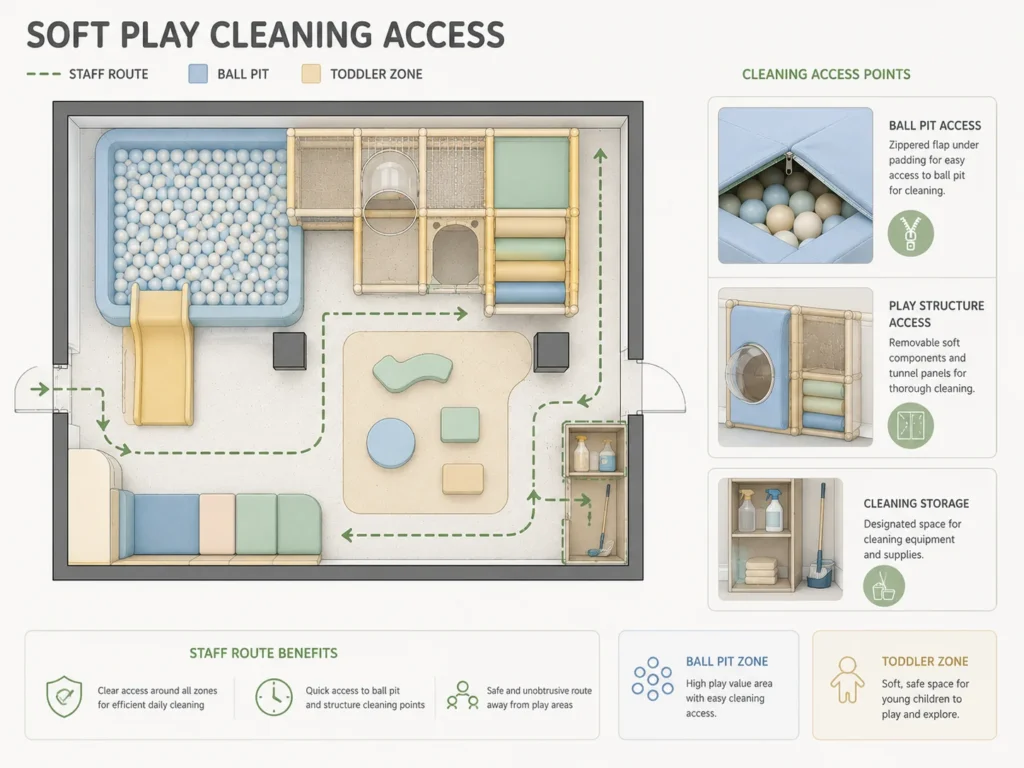
Keep a clear way into the ball pit, toddler zone and lower corners. If staff cannot reach a place easily, cleaning and small repairs become slower.
Parent view also matters. In a hotel, restaurant or mall room, adults want to see the main play area without standing inside the equipment.
If the room has a cashier, shoe area, café counter or entrance gate, mark it on the floor plan. Soft play should not block the business flow.
A soft play quote is clearer when the room, age group and play mix are known first.
Room size, clear height, photos and fixed objects start the file.
Ball pit, soft blocks, padded frame, toddler zone or role play corner.
Foam, cover, seam, color and padding notes are reviewed.
Entrance, staff route, parent view and cleaning gaps are checked.
The quote follows the confirmed layout, material level and product list.
FAQ for soft play rooms, toddler areas, ball pits and indoor kids corners.
Send room size, clear height, user age, indoor use scene, floor photos, entrance position, preferred play items, color direction and any reference photo or drawing.
It depends on the room. A small kids corner may use soft blocks, wall padding and a low slide. A larger room may use a ball pit, padded frame, tunnel, role play corner or toddler zone.
Yes. Size, color, theme, play mix, wall padding, ball pit shape, soft block style and room layout can be discussed according to the project.
Clear height, columns, doors, windows, lights, air-conditioning pipes, fire exits, counter area, parent seating and cleaning access can all affect the layout.
Yes. Hotel and restaurant kids corners can use smaller soft play layouts when the room size, parent view and cleaning plan are clear.
Send the room size, clear height, age group, photos and preferred play items. Mark doors, columns, glass walls and fire exits if they are close to the play area.