
Climbing and Net Routes
Older students often enjoy climbing nets, bridges and balance routes. The difficulty should be planned by grade, not by how tall the structure looks in a catalog.
Outdoor and indoor play projects made in China.
Photos, rough sizes, or drawings are all usable for a first reply.

A school playground gets crowded in waves. Children run out after class, form groups, split up, return to friends, and leave again when the bell rings. The layout has to work during those short busy moments.
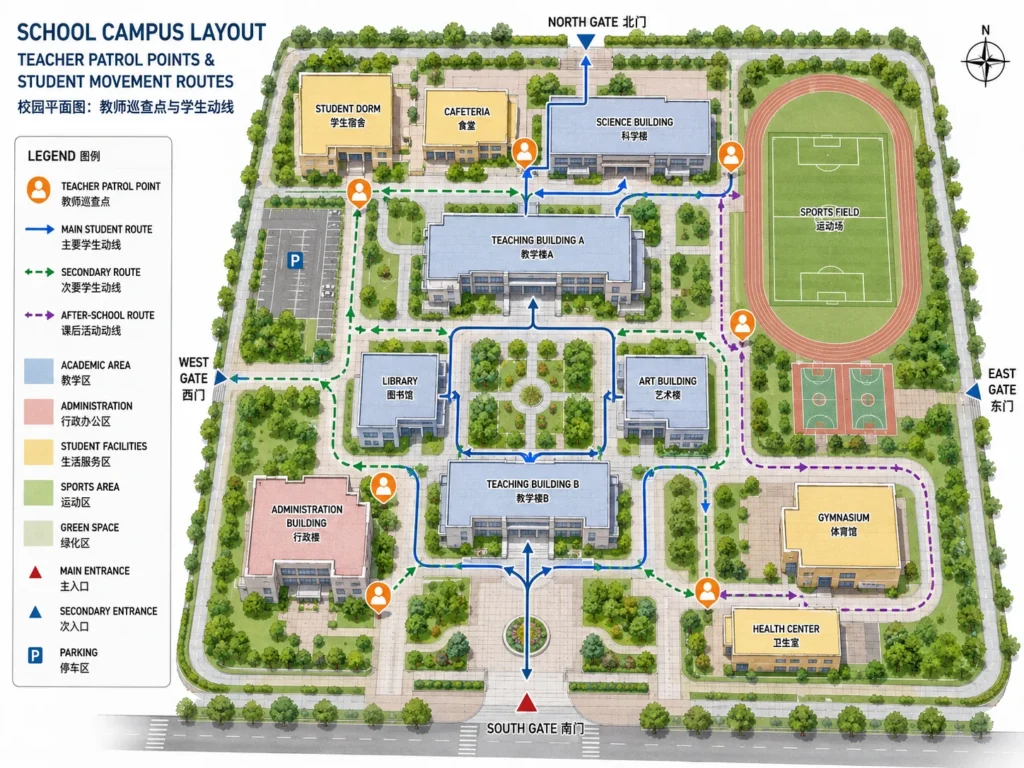
Send the yard size, grade levels, student count and photos from the classroom side. We will check the space for play routes, teacher view, open movement, sports use and daily school traffic before quoting equipment.
If the school has separate areas for younger and older students, mark them on the photo or drawing. A shared yard needs a different plan from a single-grade play space.

School projects need enough open movement, stronger daily-use parts and a layout teachers can read quickly.
A campus yard is used in a different rhythm from a public park or hotel garden. The same space may be quiet in class time and full of students five minutes later.
Write down which grades will use the area. Younger students may need simpler access, while older students may want more climbing, balance and active challenges.
Tell us how many children may enter the yard at once. Slide exits, stairs, bridges and narrow paths need more room when students arrive together.
Mark where teachers usually stand or walk. Tall panels, closed corners and back-facing routes should not block the main view across the yard.
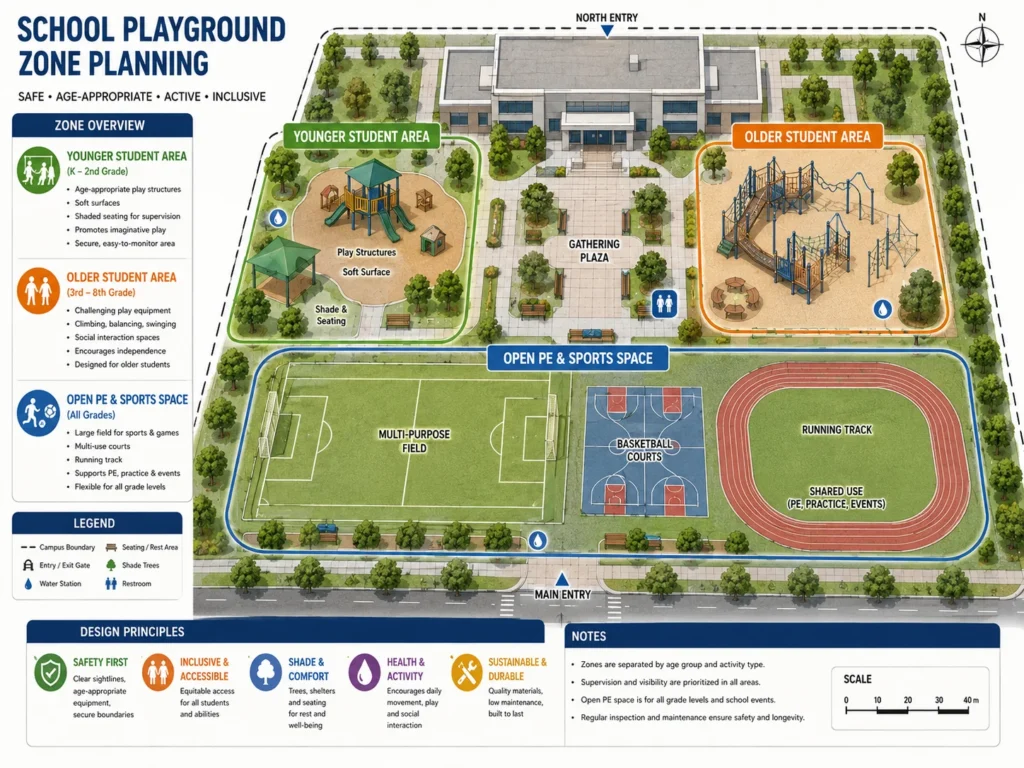
Not every meter should be filled with equipment. Schools often need open ground for running games, PE class, lining up or moving between buildings.
A school playground can mix fixed equipment, open activity space and fitness-style movement. The mix depends on age, yard size and how the school runs break time.
Older students often enjoy climbing nets, bridges and balance routes. The difficulty should be planned by grade, not by how tall the structure looks in a catalog.

Slides still work for school yards, but the exit and queue area matter more when many children use the same structure during a short break.

Stepping routes, low bridges and balance parts give movement without taking over the whole yard. They work well beside open running space.

Fitness-style items can support PE class and older students. They need clear age direction and enough surrounding space for safe movement.

A shared campus yard may need low play on one side and stronger activity on the other. Separation can be done by layout, not only by fence.

Students do not play every minute. Some wait, talk, watch, or line up. Shade, benches, open sides and clear paths can make the yard easier to manage.
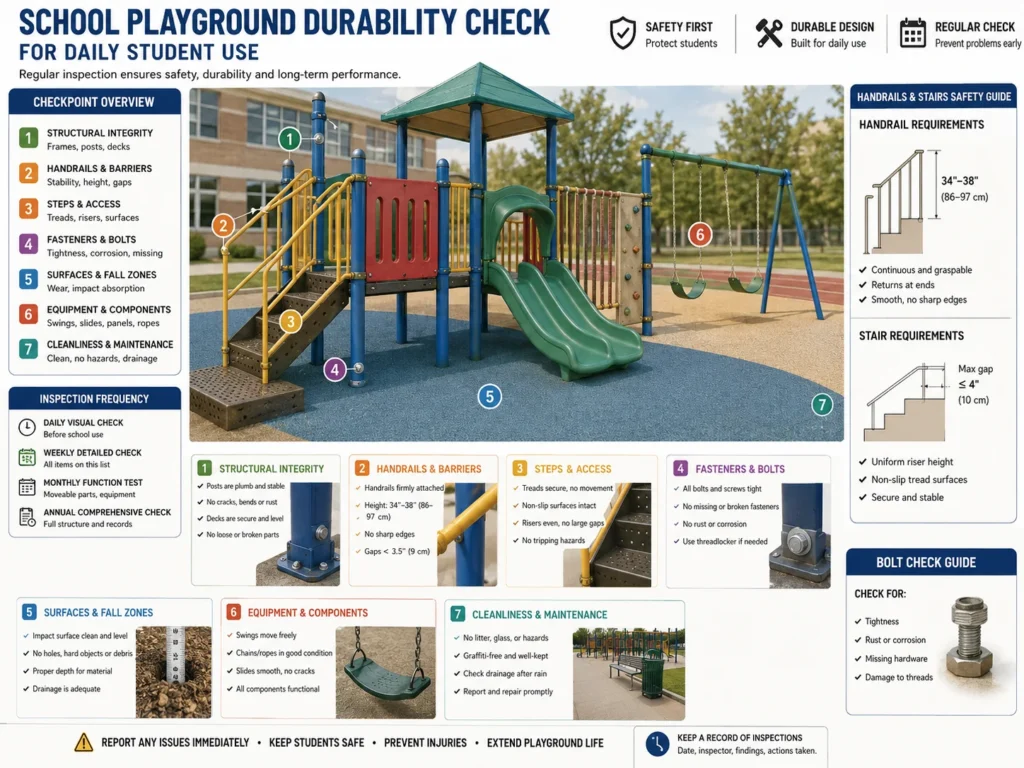
School playground parts get touched by many hands in a short time. Rails, steps, platforms, slides, net joints and bolts need to be chosen with daily student traffic in mind.
Handrails, platform edges, stair steps, bridge joints, climbing grips, rope connections and slide exits see repeated use. If the school expects heavy traffic, say it before the product list is fixed.
Schools also need equipment that staff can check. Open access around the structure helps teachers and maintenance people see wear, loose parts or blocked areas.
For seaside campuses, dusty sites or very sunny areas, material notes should be added to the order file. The same design may need different finish choices in different places.
A school quote becomes clearer when the campus team sends the right site notes from the start.
| Site Detail | Why It Matters | What to Send |
|---|---|---|
| Grade Levels | Different grades use stairs, climbing nets and balance routes differently. | List the grades or ages that will share the play area. |
| Break-time Capacity | Short heavy use affects queues, exits and open movement space. | Tell how many students may use the yard at one time. |
| Teacher View | Supervision is easier when teachers can see across the main routes. | Photos from classroom doors, patrol points or staff positions. |
| PE and Activity Use | Some yards need open class space, not only fixed play equipment. | Tell whether PE class, lining up or school events use the same area. |
| Ground Surface | Existing rubber, concrete, grass, sand or new flooring affects installation planning. | Send ground photos and note whether the surface will be changed. |
A school may ask for one playground, but the yard may need several zones. Younger students, older students, PE class and quiet waiting space do not always belong in the same corner.
Lower play can sit near younger classrooms. Climbing or active routes can sit closer to older grades. Open ground should stay connected to the main walking route instead of being cut off by a large structure.
If the playground is near a gate, parking area, cafeteria, sports field or classroom block, mark that on the drawing. Those edges affect how children enter and leave the space.
The best first file is simple: a marked photo or rough drawing with grade zones, teacher positions and open areas. We can work from that before making the product direction more detailed.
We start with the campus use pattern, then choose the equipment.
Site size, photos, grade levels and expected student count open the file.
Classroom exits, teacher positions, PE area and busy walking paths are noted.
Lower play, active climbing, slides, balance routes or fitness items are selected.
The layout keeps break-time traffic, open ground and supervision in mind.
The quote follows the confirmed zones, equipment list and site notes.
FAQ for campus playground orders, school yards and student activity areas.
Send the campus area size, student grade levels, expected number of children, site photos, ground condition, teacher supervision points, preferred play items and any approval or document request.
School playgrounds handle older children, faster movement and heavier break-time traffic. They can use stronger climbing, balance, slide and activity zones, while kindergarten projects usually stay lower and simpler.
Yes. A school yard can mix slides, climbing, balance routes, outdoor fitness items, open activity space and rest areas. The final layout should match the grade levels and school routine.
Yes. Send a site drawing or photos with measurements. The layout can work around entrances, classroom exits, teacher sight lines, sports areas and walking routes.
Yes, but the zones should be clear. Younger grades can use lower and simpler play parts, while older grades can use more active climbing or fitness-style areas.
Send the campus size, grade levels, student count and photos from classroom or teacher positions. We will check the school flow before suggesting equipment.