
Belt Seat Swings
Belt seats are common for school-age children and public playgrounds. They need open ground and a layout that keeps waiting children out of the swing path.
Outdoor and indoor play projects made in China.
Photos, rough sizes, or drawings are all usable for a first reply.

A swing does not stay inside its frame line. Children move forward, backward, sideways, wait nearby, and sometimes run across the wrong place. The quote starts with the open space around the swing, not only the number of seats.
Send the ground size, age group, preferred seat type and a wide photo of the site. We will check the frame direction, swing path, queue area and nearby play equipment before recommending a swing set.
Mark nearby paths, fences, trees, benches and other equipment on the photo. A swing set needs space in front and behind, not just a small rectangle on the drawing.

Swing projects need the right seat, frame size, motion clearance and ground layout before the order is quoted.
A swing area is active even when only one child is sitting on the seat. Other children wait, walk behind, push from the side, or run past the frame. The first layout needs to protect that moving area.
Show the open ground in front and behind the swing. A narrow corner or busy walkway is usually not a good place for a swing bay.
Toddler seats, belt seats and nest swings are used differently. The seat type should follow the age group, not only the look of the project.
The swing path should not point toward an entrance, slide exit, bench, road edge or other busy route. Mark the preferred direction on the photo.
A kindergarten yard, school break area and public park do not need the same swing mix. Tell us who will use the swing most often.
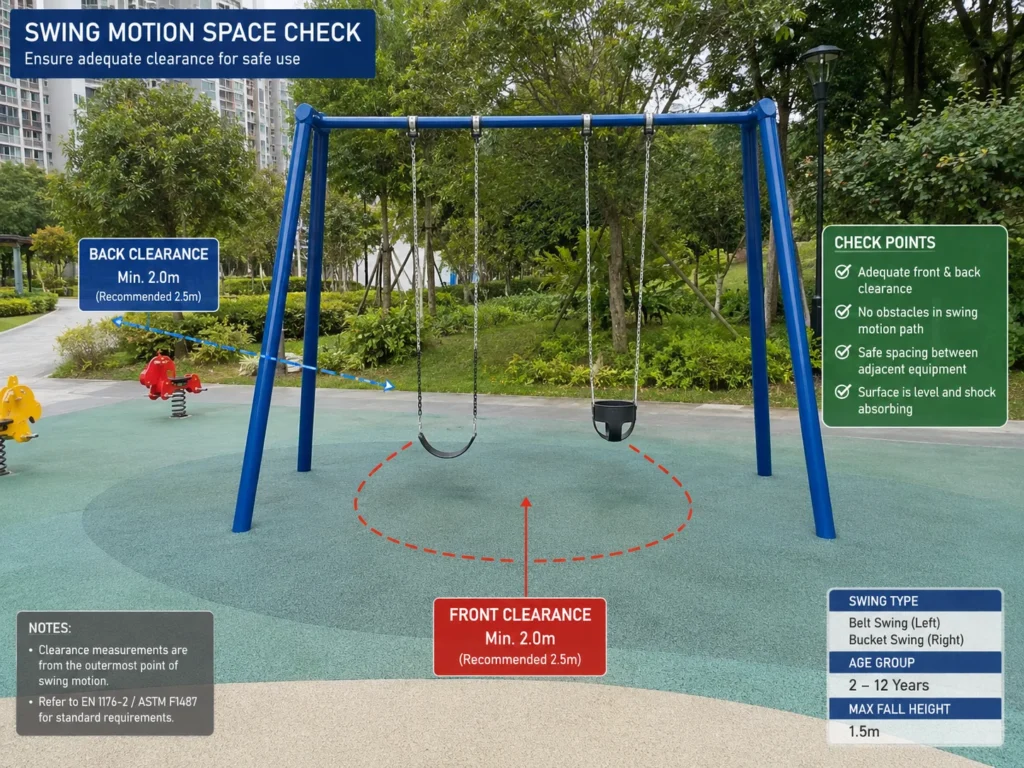
Seat choice changes the whole swing area. Do not choose the seat only from a catalog photo. Match it with age, traffic and supervision.
Belt seats are common for school-age children and public playgrounds. They need open ground and a layout that keeps waiting children out of the swing path.

Bucket seats are used for younger children who need more support. They are usually placed where adults can stand close and watch the swing clearly.

Nest swings are popular in parks and community spaces. They need enough surrounding room because children may use them in a wider, less controlled way.

Multi-bay frames help when several children need to use swings at once. The frame length and open ground must be checked together.

Swing frames and seats can follow a park color, school color or theme direction. Color changes should still keep the swing area easy to see.

Some community and park projects ask for family-use or group-use swing ideas. We check age range, frame size and supervision before suggesting a type.
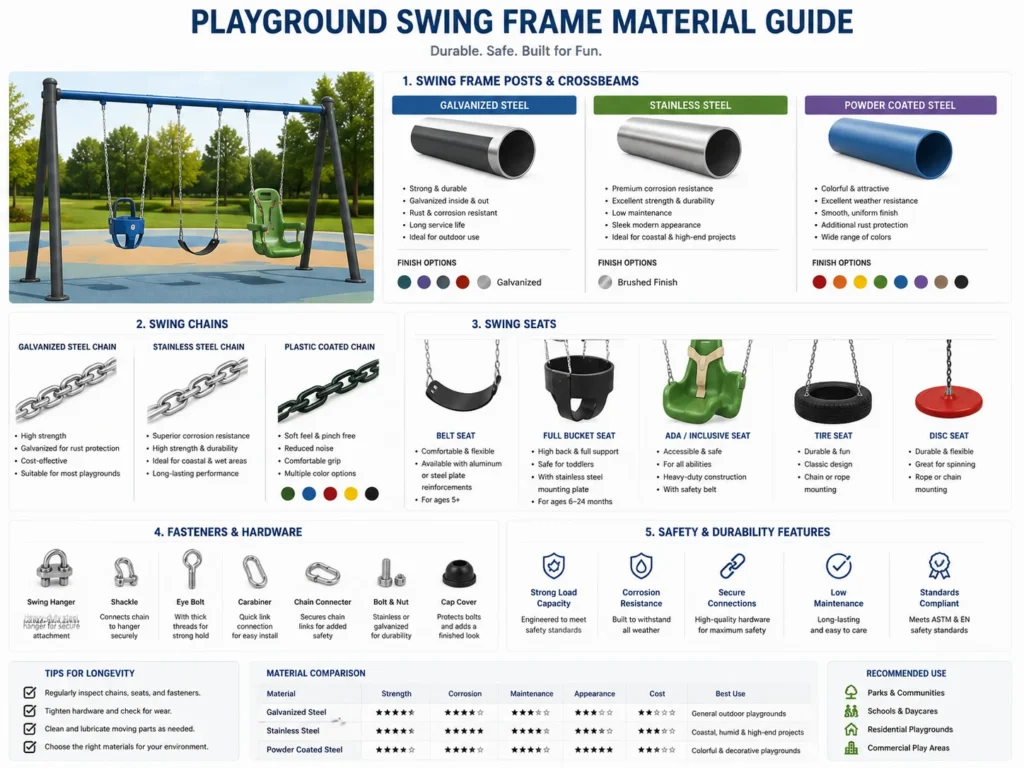
Swings move every day. The frame, chain, hanger, seat and fixing parts need more attention than a decorative panel that children only look at.
Frame size, steel post direction, hanger position, chain length, seat type and ground fixing method should be checked before production. A changed seat can affect the full frame layout.
For park projects, the swing may sit away from the main play structure. For school projects, it may need separation from running paths. For kindergarten use, adult access around the seat matters more.
If the site is near the sea, very sunny, dusty, or open to heavy public use, add that note to the file. It helps us check coating, fasteners and later maintenance expectations.
A swing quote changes when the frame size, number of seats, seat type or site direction changes. These details are useful at the first inquiry stage.
| Swing Detail | Why It Matters | What to Send |
|---|---|---|
| Seat Type | Toddler, belt and nest seats need different frame and use planning. | Age group, preferred seat photo or seat name. |
| Number of Seats | Frame length and open ground change as seat count increases. | Seat quantity and whether seats share one frame. |
| Swing Direction | The swing path should avoid paths, slide exits, fences and waiting areas. | Photo with a marked arrow showing swing direction. |
| Ground Space | Swings need front and back clearance, not only post-to-post width. | Wide site photo and usable ground size. |
| Site Type | School, park, kindergarten and community projects use swings differently. | Project type and who will supervise the area. |
A swing set works best when it is not placed in the middle of every route. Children need room to swing. Other visitors need a safe way around.
Keep swings away from main entrances, slide exits, crowded benches and narrow walking paths. The swing line should be easy to see from a distance.
In a park, swings can sit beside the main play structure if the path between them is clear. In a school, they may need a separate edge of the yard. In kindergarten projects, they should stay close enough for adults to help.
If you already have a playground layout, mark the swing area first. Do not add swings at the end just because there is a little space left.
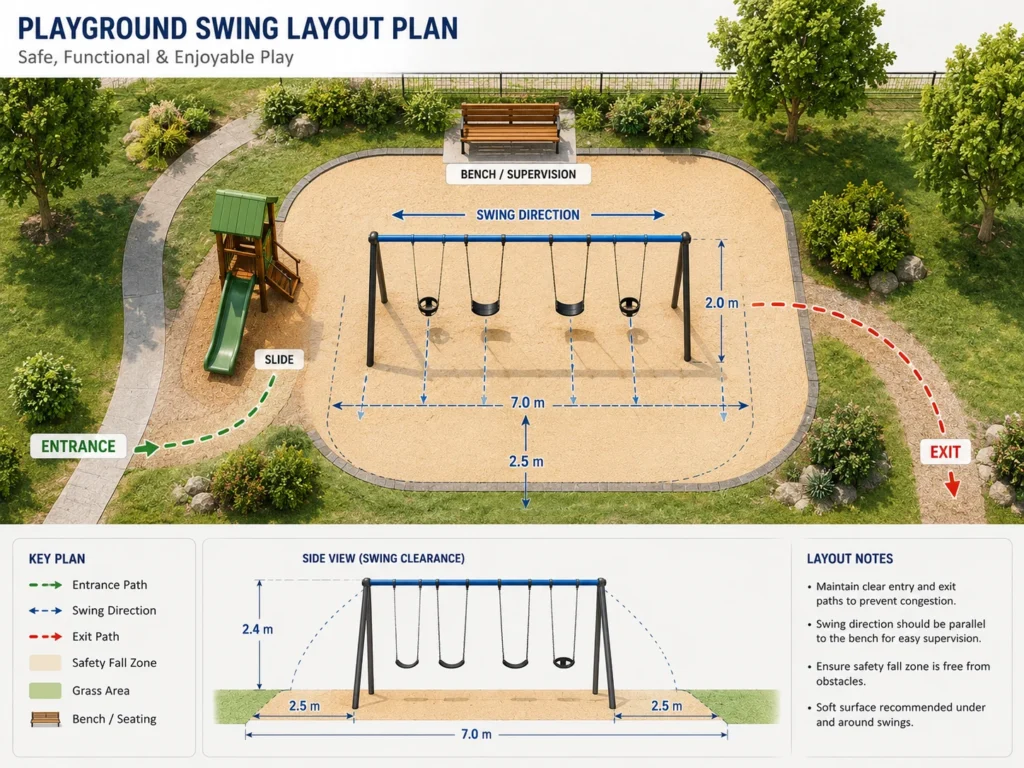
Swing quotes are clearer when the seat type and motion space are known early.
Wide photo, usable ground size and nearby paths start the file.
Belt seat, bucket seat, nest swing or other seat direction is confirmed.
Swing direction and front-back clearance are marked on the layout.
Frame size, number of seats, material notes and fixing method are reviewed.
The quote follows the confirmed seat, frame, layout and site notes.
FAQ for swing frames, seat types, site space and project quotation.
Send the site size, age group, number of seats, preferred seat type, indoor or outdoor use, ground photo, entrance side and any reference photo or drawing.
Belt seats, toddler bucket seats, flat seats, nest swings and group-use swing seats can be discussed depending on the project and user age.
Yes. School and park swing projects can be discussed by age group, frame size, ground space, traffic flow and supervision needs.
Swing frames, seat types, colors, number of bays and some layout details can be discussed according to the site and project requirement.
Yes, if there is enough open space. Send a wide photo of the existing playground and mark where you want the swing frame to stand.
Send the site photo, ground size, age group, seat type and number of seats. Mark nearby paths, benches, slide exits or fences if they are close to the swing area.