
Rope Net Climbers
Rope nets work well for active routes in parks and schools. The net size, angle and height should match the user age and available space.
Outdoor and indoor play projects made in China.
Photos, rough sizes, or drawings are all usable for a first reply.

Climbing equipment gives children a reason to move slowly, look for the next grip, cross a bridge, balance their feet and try again. The route should match the age group. Too easy becomes boring. Too difficult becomes a traffic jam.
Send the site size, age range, preferred climbing type and one reference photo. We will check height, grip spacing, route width, nearby equipment and where children can enter and leave the climbing area.
Mark whether the climbing part is for a school yard, public park, kindergarten area or indoor room. The same net route is not right for every age group.

Rope nets, walls and bridges need clear entry points, exit points, grip spacing and surrounding space.
A climbing part is not judged by height alone. We check how children start, where they hold, where they step, and how they leave the route.
A kindergarten net and a school-age rope route are different products in practice. Tell us the user age before choosing height or difficulty.
Grip spacing, step distance, bridge movement and route height should fit the users. A hard route may look exciting but slow down the whole play area.
Children need a clear way to start and a clear place to finish. Avoid forcing the exit into a slide queue, swing area or narrow walkway.
Teachers, parents or park staff should be able to see the main climbing points. A high panel or closed corner can hide where children pause.
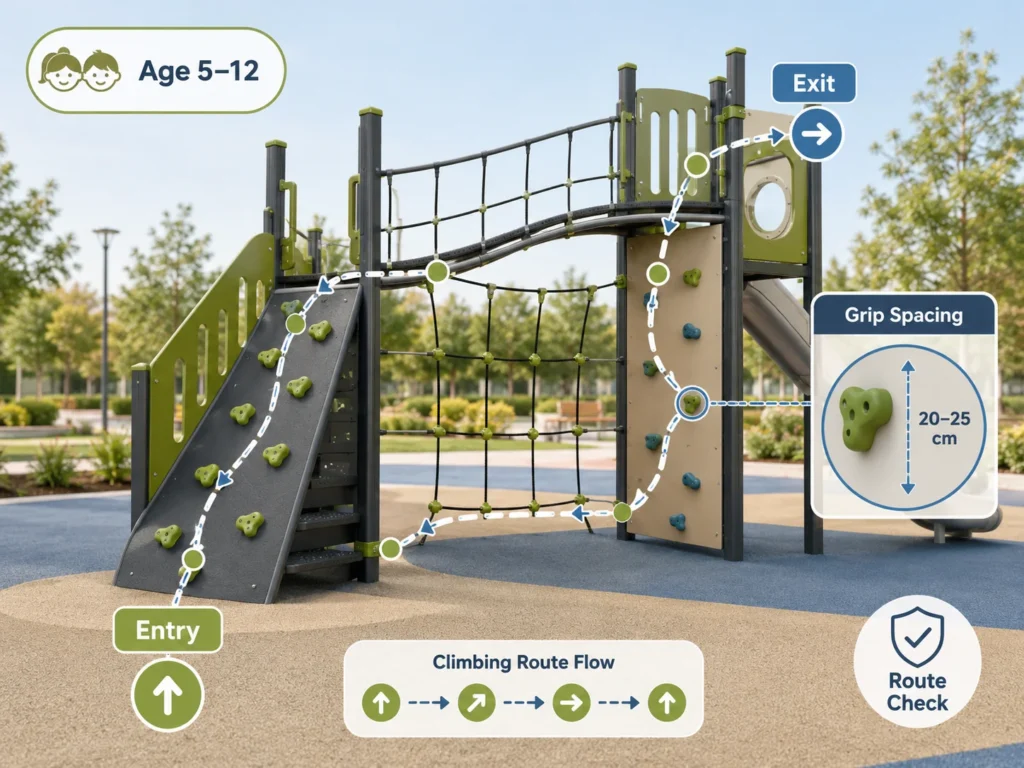
Climbing can be a small part of a playset or the main activity of the playground. The site and age group decide which type makes sense.
Rope nets work well for active routes in parks and schools. The net size, angle and height should match the user age and available space.

Climbing walls can be simple panels for younger children or more active routes for school-age users. Handhold spacing needs early discussion.

Net bridges connect platforms and slow children down in a good way. The bridge should not block a teacher’s view or make one narrow route too crowded.

Balance bridges add movement without needing a tall structure. They are useful for school yards, parks and wider kindergarten areas.

Indoor rooms may use padded climbing blocks, short ramps, soft tunnels and low net routes. Room height and soft flooring should be checked first.

Adventure-style routes can mix nets, bridges, towers, climbing walls and themed panels. The route should be exciting without trapping children in one bottleneck.
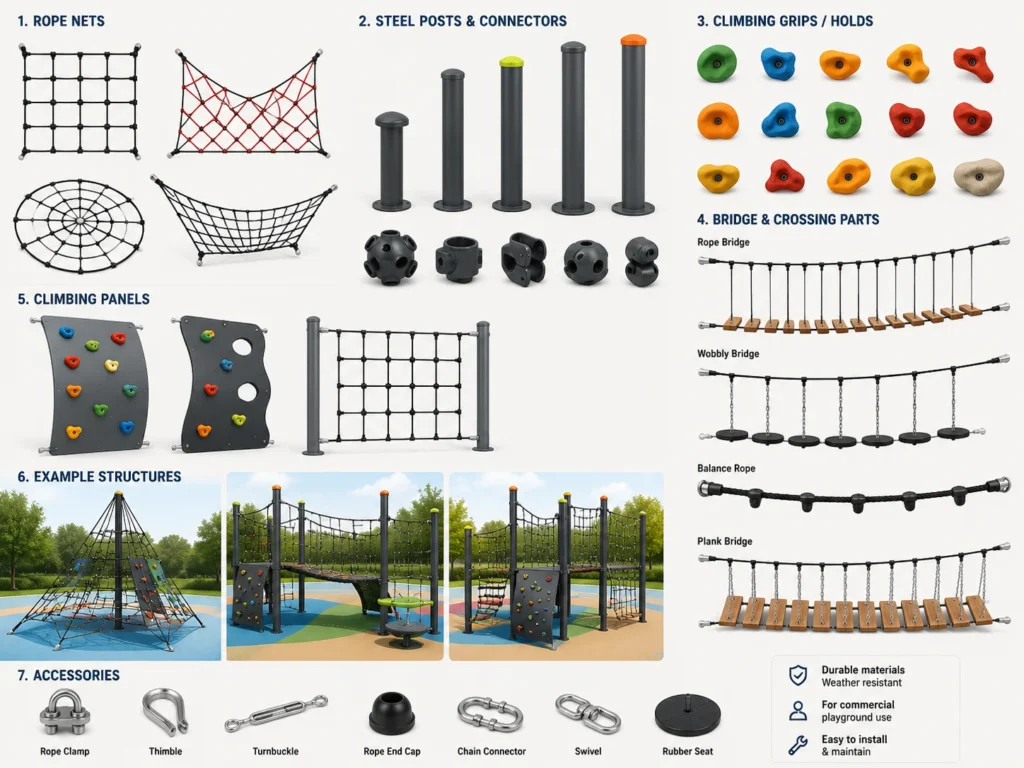
Climbing parts are pulled, stepped on and held from different angles. The rope, grip, frame and fixing points need to be chosen around use, not only appearance.
Rope diameter, net spacing, handholds, bridge surface, steel posts, connectors and fixing points should be checked before production. If the route changes, some parts may need to change too.
Outdoor climbing routes need a weather note. Indoor soft climbing needs room height, padding and cleaning access. A public park net and an indoor preschool ramp should not be handled with one material checklist.
If the climbing route is custom, send the drawing version before final quotation. A small change in platform height or route angle can affect many connected parts.
A climbing quote changes when the height, route, material or age level changes. These details help us prepare a cleaner answer.
| Climbing Detail | Why It Matters | What to Send |
|---|---|---|
| Age Group | Controls route height, grip spacing, bridge difficulty and climbing angle. | Age range and whether mixed ages will use the same route. |
| Climbing Type | Rope net, wall, bridge and balance parts need different structure and space. | Reference photo or preferred climbing type. |
| Height | Height affects support, entry point, supervision and nearby equipment. | Platform height or desired climbing height. |
| Route Direction | Entry and exit should not collide with slide, swing or walking paths. | Marked photo showing where children start and finish. |
| Material | Rope, steel, plastic grips, soft padding and connectors affect use and price. | Indoor or outdoor use, material preference and site condition. |
A climbing route needs a start, a middle and an exit. If it is added after every other part is fixed, the route may become too narrow or too hard to watch.
Keep the climbing entry away from crowded slide stairs and swing paths. Children often pause at the first step, so the start point needs room.
The exit side should be easy to understand. If children finish a bridge or wall and do not know where to go next, they may block the platform.
For schools and parks, leave space for adults to see the route from the side. For indoor rooms, check ceiling height and soft landing before choosing a taller feature.
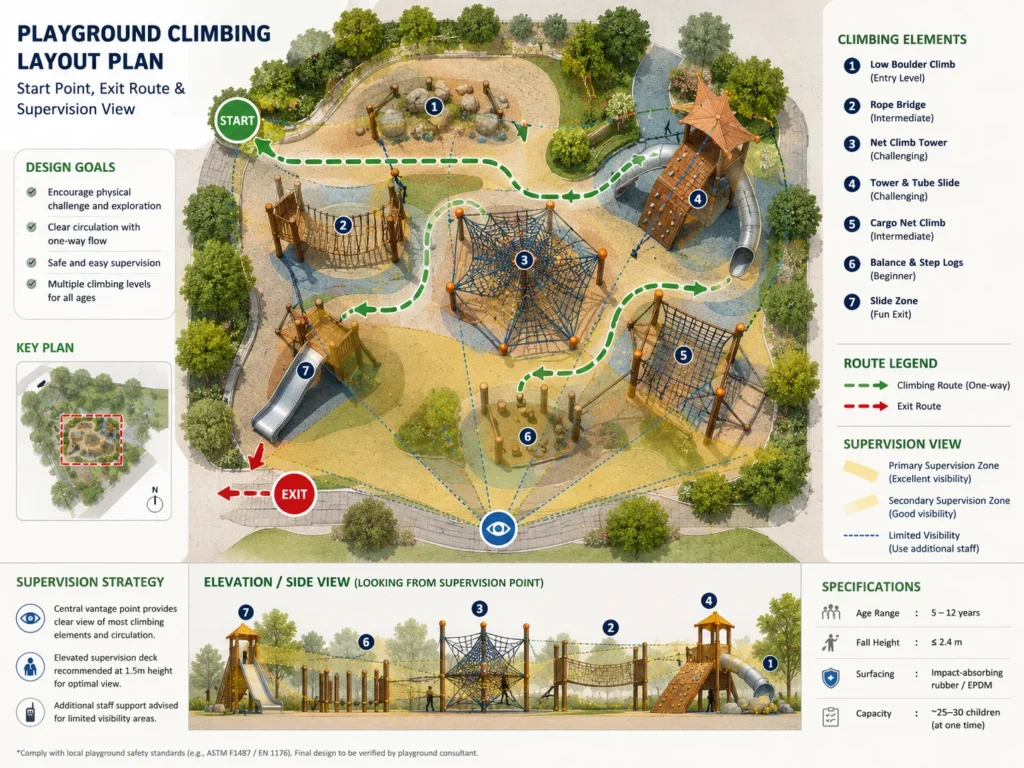
Climbing quotes are clearer when the age level and route are known early.
Site size, photos, indoor or outdoor use and project type start the file.
Rope net, wall, bridge, balance route or soft climbing direction is selected.
Height, grip spacing, route difficulty and supervision view are reviewed.
The start point, finish point and nearby equipment are marked on the layout.
The quote follows the confirmed route, material, size and site notes.
FAQ for rope nets, climbing walls, bridge routes and active play structures.
Send the site size, age group, indoor or outdoor use, preferred climbing type, height range, surrounding space, reference photo and any project drawing.
Rope nets, climbing walls, net bridges, balance bridges, cargo nets, low climbing panels, adventure routes and custom climbing structures can be discussed by project.
Yes, but the height, grip spacing, route difficulty and supervision view should be adjusted for younger users. For kindergarten use, lower and simpler routes are usually better.
Yes. Route shape, material direction, color, theme panels, rope layout, bridge length and connection with other playground structures can be discussed.
Yes. Many climbing routes connect to platforms, decks, slides or bridge systems. The connection point should be shown in the drawing before quotation is finalized.
Send the site size, age group, preferred climbing type, height range and a reference photo. Mark the entry and exit direction if you already have a layout.