
Soft Play Frame
A soft play frame can include padded posts, netted routes, crawl spaces, small slides and soft obstacles. It works well when the room needs a clear main play structure.
Outdoor and indoor play projects made in China.
Photos, rough sizes, or drawings are all usable for a first reply.

An indoor playground begins with the room. A column in the middle, a low beam, a narrow entrance, or an air-conditioning pipe can change the play route before any color is picked.
Send the floor size, clear height, photos from each corner, and the user age group. We can then talk about soft play, ball pit, toddler area, slides, climbing routes, parent view and commercial use.
For shopping malls, hotels, restaurants or family entertainment centers, mark the entrance, cashier area, emergency exit and parent seating area before layout work starts.

Indoor play areas need clear height, route planning, padding, soft materials and daily cleaning access.
Indoor projects fail early when the room is guessed. A pretty 3D design is not helpful if the slide hits a beam or a column blocks the main route.
Measure from finished floor to the lowest beam, pipe, lamp or ceiling part. This number controls platform height, slide choice and upper play routes.
Mark columns, walls, counters, glass doors, storage rooms and service areas on the floor plan or photo. The play frame has to work around them.
Children need a clear entrance. Adults need a clear view. The site may also need a fire exit or service route kept open.
A free hotel kids corner and a ticketed family entertainment center are not designed the same way. Tell us how the room will be used.
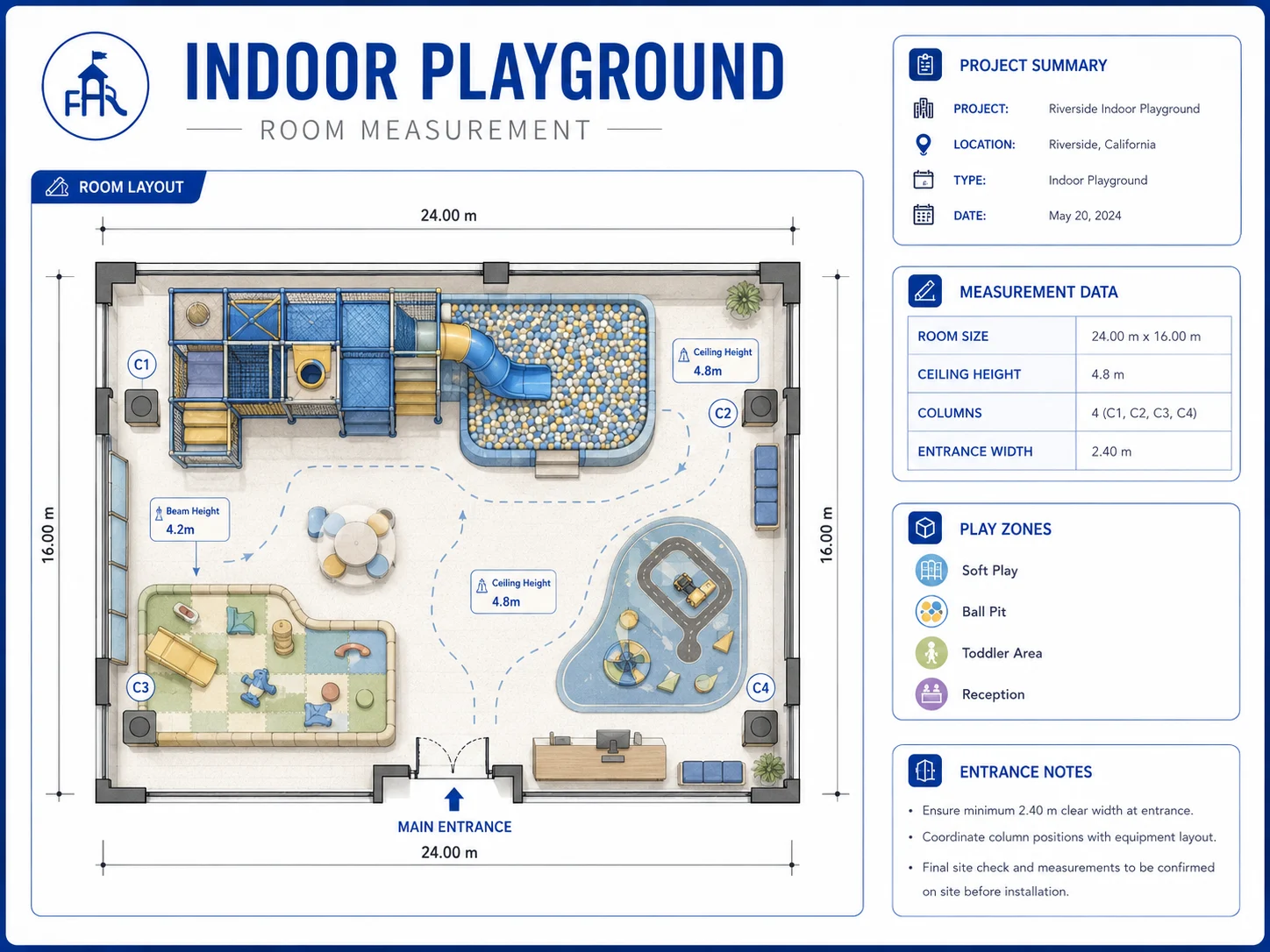
Some rooms need one main soft play frame. Some work better with a ball pit, a toddler corner, and a few small activity areas. We choose the mix after checking the room, not before.
A soft play frame can include padded posts, netted routes, crawl spaces, small slides and soft obstacles. It works well when the room needs a clear main play structure.

Ball pits attract younger children and families. The buyer should think about depth, access, soft edge, cleaning schedule and whether the ball pit connects to the main play frame.

Toddler zones stay lower and simpler. Soft shapes, short steps, small slides and open parent view matter more than tall play routes.

Jump areas need their own spacing and control. They should not be squeezed into the same route as toddler play or the main entrance.

Small shop, kitchen, traffic or house corners can make the room feel richer without adding too much height. They are useful in hotel, restaurant and preschool spaces.

Net routes add active play when the room has enough height. The design should match user age and keep the exit route easy to understand.
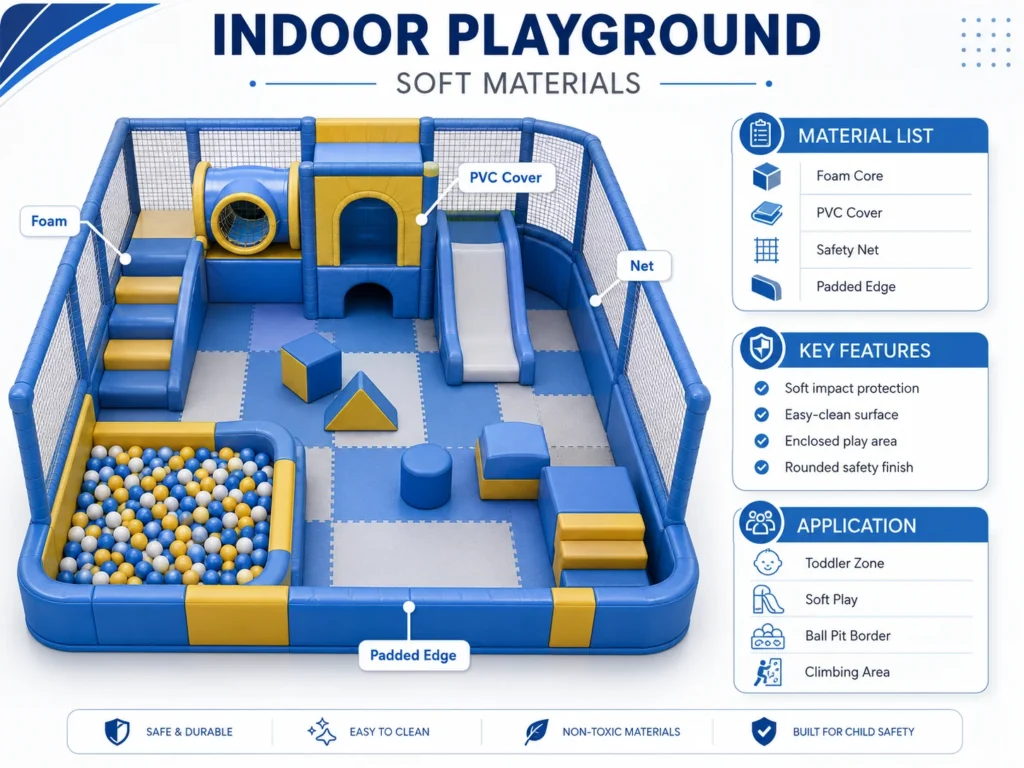
Indoor play equipment is touched all day. Indoor play surfaces are touched all day. Children crawl on them, sit on them, pull on them, and climb over them. So the cover, foam, seams, mats, and cleaning gaps need to be planned early.
Foam density, PVC cover, stitched edges, padded posts, nets, zippers, mats and contact surfaces can be discussed according to the order. A high-traffic play center may need a different material conversation from a small hotel kids corner.
Cleaning is easier when the room is planned well. Ball pits, tunnels, corners and lower padded parts should not be placed in a way that makes daily care difficult.
If the operator has a cleaning team or local safety rule, tell us early. We can avoid layouts that look nice in a rendering but create trouble for daily operation.
Indoor playground plans change fast when the room has obstacles. Share these details before the first drawing.
| Room Detail | Why It Matters | What to Send |
|---|---|---|
| Clear Height | Controls platform levels, slide height, net routes and upper-frame design. | Measure to the lowest beam, pipe or ceiling part. |
| Columns | Columns can split the play route or become padded features if planned well. | Mark each column on the floor plan with size and position. |
| Entrance | The entrance affects ticket control, shoe area, parent view and child movement. | Send a photo from the doorway and mark the opening width. |
| Fire Exit | Emergency routes cannot be blocked by play structures or loose equipment. | Mark fire doors, service paths and any local rule from the building manager. |
| Parent Area | Adults need seats, view lines and walking space around the play zone. | Tell us whether parent seating, cashier or café area is part of the room. |
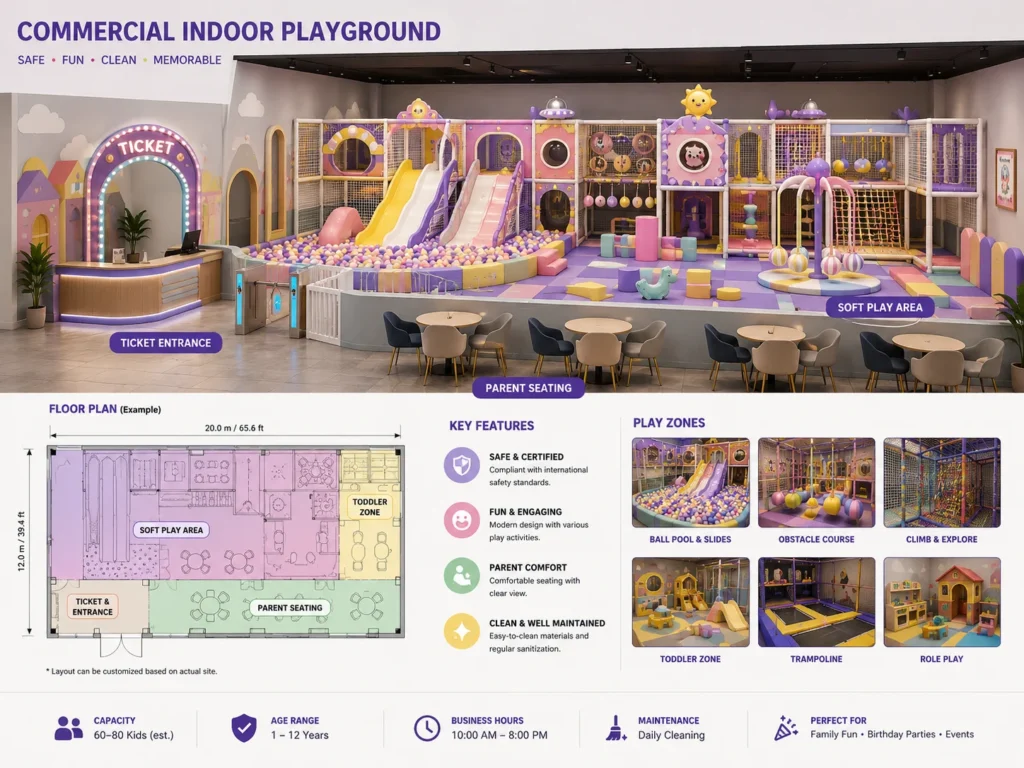
A commercial indoor room is not only for play. It also needs ticket flow, parent waiting, staff access, cleaning, repair space and a layout that keeps children moving.
Family entertainment centers usually need stronger play variety and repeat-visit value. Shopping mall rooms need a clear entrance and strong visual attraction from the outside. Restaurants and hotels may prefer a smaller kids corner that keeps families nearby.
If the room will charge tickets, tell us the expected age range and target capacity. If it is a free guest area, the design may focus more on easy care, open view and safer low-height play.
The product list should follow the room and the business plan. A large ball pit may be good for one operator and a cleaning problem for another.
Indoor projects need room details before the product list becomes reliable.
Photos from each corner, floor size and clear height start the file.
Columns, doors, pipes, lights, windows and fire exits are marked.
Soft play frame, ball pit, toddler zone, role play or climbing route are selected.
The layout works around entrance, parent view, service area and traffic.
The quotation follows the confirmed room plan, material notes and product list.
These questions focus on indoor playground rooms, soft play and commercial layout planning.
Send room length, width, clear height, entrance position, columns, windows, lights, air-conditioning pipes, fire exits, user age group and reference photos. A rough floor plan is helpful, even if it is not a CAD drawing.
Low ceiling rooms can still be discussed, but the play route, slide height, climbing parts and upper platforms need to be adjusted to the clear usable height. Send the lowest height, not only the average height.
It depends on the room. A small hotel corner may only need a low slide, soft blocks, and wall padding. A paid play center may use a larger frame, ball pit, net route, role-play corner, or jump area.
Yes. Buyers can send a floor plan, photos or rough measurements. The layout should work around columns, entrances, fire routes, service counters and parent seating areas.
Yes. Theme, color, wall graphics, role play corners and play routes can be customized. The design still needs to fit the room height, safe movement route and daily operation plan.
Send the floor size, clear height, room photos and age group. Mark columns, doors, fire exits, lights and pipes if you can. We will check the room before suggesting a play layout.